Infrastructure Management for Modern Data Centres


Neterra launches a new fibre metro network in Sofia
Neterra has built and launched a new, fast and secure fibre metro network in Sofia, the capital of Bulgaria. It covers the entire capital, including all important business centres, central streets, and boulevards. Through it, the company offers internet for businesses, protection from DDoS attacks, other connectivity services and media streaming. Qualified engineers are responsible for maintenance and provide technical support 24/7. Neterra's new network has several major advantages compared to the networks of other operators. It is the only fibre network that reaches all the data centres in Sofia, enters them, and connects them. This includes both Neterra's data centres and those of other operators. Another benefit is that cables are run deeper underground and in protected conduits to prevent risks of outages. For the Sofia fibre metro network, the company uses the most modern and high-quality equipment - from cables to optical distribution frames (ODF) and connectors. As a result, the connection is of exceptional quality. In the capital of Bulgaria, Neterra maintains over 550 active business services and consciously invests in reliable components. Thanks to the large capacities set in advance, Neterra's metro network is expected to meet the needs of businesses in Sofia for years to come. At the same time, it is connected to the Bulgarian core fibre network of the company, which connects all major Bulgarian cities such as Varna, Veliko Tarnovo, Burgas, Plovdiv and Ruse.

Swindon data centre goes carbon neutral in sustainability push
A data centre in Swindon, Carbon-Z, has become one of the first in the UK to be fully carbon neutral, following an overhaul of its site and work practices. This includes the submersion of all hardware components in cooling liquid and sourcing electricity from green energy providers. Plans are also in place for installing solar panels on the site’s roof. The site was previously known as SilverEdge and is rebranding itself to reflect the change of direction in how it operates and the services it provides to clients. It now hopes to inspire a wider shift towards sustainability within the data centre industry, which accounts for more greenhouse gas emissions annually than commercial flights. Jon Clark, Commercial and Operations Director at Carbon-Z, comments, “As the UK and the world move towards achieving net zero emissions by 2050, our industry is responsible for making data centres greener and more efficient. At Carbon-Z, we continually look for new ways to improve our sustainability, with the goal being to get our data centres to carbon neutral, then carbon zero and then carbon negative. We believe this is possible and hope to see a wider movement among our peers in the same direction over the coming years.” Playing it cool The growing intensity of computing power, as well as high performance demands, has resulted in rapidly rising temperatures within data centres and a negative cycle of energy usage. More computing means more power, more power means more heat, more heat demands more cooling, and traditional air-cooling systems consume massive amounts of power, which in turns contributes to the heating up of sites. To get around this, Carbon-Z operates using liquid immersion cooling, a technology which involves the submersion of hardware components in dielectric liquid (which does not conduct electricity) and conveys heat away from the heat source. This greatly reduces the need for cooling infrastructure and costs less than traditional air cooling. The smaller amount of energy that is now needed to power the Swindon site can now be sourced through Carbon-Z’s Green Energy Sourcing.  While its clear that immersion cooling is quickly catching on - it is predicted to grow from $243 million this year to $700 million by 2026 - the great majority of the UK’s more than 600 data centres are not making use of it, and continue to operate in a way which is highly energy intensive and carbon emitting. Riding the wave As part of its rebrand, Carbon-Z has also updated the kinds of services it offers to customers to make sure that they are financially, as well as environmentally, sustainable. Its new service, Ocean Cloud, has been designed with this in mind, providing customers dedicated servers and a flat-fee approach to financing. Having a dedicated server within a data centre means that spikes in demand from other tenants has no effect at all on yours, avoiding the ‘noisy neighbour’ problem associated with the multi-tenant model favoured by many large operators. This makes the performance of the server more reliable and energy efficient. Ocean Cloud also solves one of the other major problems with other cloud services - overspend - through its flat-fee approach. Customers are charged a fixed fee that covers the dedicated server and associated storage, as well as hosting and remote support of the hardware infrastructure to reduce maintenance overheads. Jon comments, “We are very proud of Ocean Cloud, as it allows us to offer clients a service that is not only better for the ocean, the planet and for our local communities than other hosted services, but also brings clear operational and cost-related benefits. Striking this balance is crucial to ensure customers are on board with the transition to more sustainable data centre operations, especially at times like these when many companies are feeling the financial pinch off the back of rising inflation.”

How reliable is your backup power?
By Paul Brickman, Commercial Director at Crestchic What does good look like? It’s no surprise that the data centre sector’s reliance on UPS is on the up, and the onus is often on the site manager or maintenance teams to ensure the equipment that provides this power is reliable, well-maintained, and fit for purpose. The maintenance and regular testing of a UPS primary power source is considered best practice and any business that runs this sort of system will likely have a programme of maintenance in place. But this is only half a job done. There remains an astonishing number of data centres that fail to regularly test their backup power system, despite it lying dormant for the majority of the year. Instead, data centres are putting their trust in fate, hoping that the backup system will activate without fail - a fool’s game given the increasing cost of downtime. Why factory testing is not enough UPS systems and backup generators are typically tested at the factory as part of the manufacturing and quality testing process. Some businesses mistakenly think that this will be sufficient to ensure the equipment will operate effectively after installation. The reality is that on-site climatic conditions such as temperature and humidity often vary between locations. These variations in environment, combined with the impact of lifting, moving and transporting sensitive equipment, can mean that the manufacturer-verified testing may be thrown off kilter by on-site conditions or even human intervention during installation. For this reason, it is absolutely critical that backup power systems are commissioned accurately and tested in-situ in actual site conditions using a load bank. Where unplanned downtime is likely to be costly or even devastating to a business’ financial stability - having backup power such as a generator is crucial. Wherever power is generated, there is also a need for a load bank - a device that is used to create an electrical load that imitates the operational or ‘real’ load that a generator would use in normal operational conditions. In short, the load bank is used to test, support, or protect a critical backup power source and ensure that it is fit for purpose in the event that it is called upon. Backup power testing best practice A robust and proactive approach to the maintenance and testing of the power system is crucial to mitigate the risk of failure. However, implementing a testing regime that validates the reliability and performance of backup power must be done under the types of loads found in real operational conditions. What would be considered best practice for testing a backup power system? Ideally, all generators should be tested annually for real-world emergency conditions using a resistive-reactive 0.8pf load bank. Best practice dictates that all gensets (where there are multiple) should be run in a synchronised state, ideally for eight hours but for a minimum of three. Where a reactive-only load bank is used, testing should be increased to four times per year at three hours per test. In carrying out this testing and maintenance, fuel, exhaust and cooling systems and alternator insulation resistance are effectively tested, and system issues can be uncovered in a safe, controlled manner without the cost of major failure or unplanned downtime. Why is resistive-reactive the best approach? Capable of testing both resistive and reactive loads, this type of load bank provides a much clearer picture of how well an entire system will withstand changes in load pattern while experiencing the level of power that would typically be encountered under real operational conditions. Furthermore, the inductive loads used in resistive-reactive testing will show how a system will cope with a voltage drop in its regulator. This is particularly important in any application which requires generators to be operated in parallel (prevalent in larger business infrastructures such as hospital or data banks) where a problem with one generator could prevent other system generators from working properly or even failing to operate entirely. This is something which is simply not achievable with resistive-only testing. Secure your power source The importance of testing is being clearly recognised in many new data centres, with the installation of load banks often being specified at the design stage rather than being added retrospectively. Given that the cost of a load bank is typically only a fraction of that of the systems which it supports, this makes sound commercial sense and enables a preventative maintenance regime, based on regular and rigorous testing and reporting, to be put in place from day one. While testing of power systems is not yet a condition of insurance, some experts believe it is only a matter of time before this becomes the case. At the very least, by adopting a proactive testing regime, data centres can take preventative action towards mitigating the catastrophic risk associated with power loss.

How smart innovation is helping data centres hit net zero
By Simon Prichard, Product Strategy Manager, Mitsubishi Electric. As data centres become an increasingly critical element of the UK’s digital infrastructure, the question continues to circle about how we can make them as energy efficient as possible. This is a vital point that needs to be addressed. After all, data centres are a huge source of carbon emissions, collectively pumping out the equivalent CO2 of a mid-sized country every year. In order to reach the UK’s carbon reduction goals, the emissions caused by the whole data centre industry must be significantly cut over the next few (vital) years. Of course, the environmental impact of data centres is already being closely considered and green construction is coming to the forefront of design. In fact, many centre operators have pledged to reach zero-carbon emissions by 2030. At an industry level, the Climate Neutral Data Centre Pact has committed to the fact that data centre electricity demand will be matched by 75% renewable energy or hourly carbon-free energy by December 31, 2025, and 100% by December 31, 2030. As part of this push, one area that must be focused on is investing in sustainable and efficient cooling solutions - as cooling is a big energy user in data centres - as well as reducing the level of embodied carbon in data centres and using analytics and smart insights to optimise how power is used. Making cooling sustainable Data centres and IT cooling rooms are unique environments, where a constant temperature must be maintained year-round. The spaces are built to be resilient with back-up generators and cooling equipment designed to work reliably 24 hours a day. This equipment is crucial, as it is there to stop computers from overheating and shutting down. For example, when humidity levels vary, reliable, close control cooling must kick in and keep equipment at the right temperate to work effectively. And it isn’t just the performance of cooling equipment at the start of its lifecycle that needs to be taken into account, a chiller also needs to continue delivering that level of performance every day through to year 10 and beyond. This constant cooling requires a lot of energy, so the challenge is to cool spaces reliably while making sure it happens in the most energy efficient, sustainable way possible. Advanced controls can help here, as well as the use of planned, preventative maintenance, which can keep products working as efficiently as possible. Chiller diagnostic checks, run-performance evaluations in combination with inverter technology, all promote optimised performance and reduce wear and tear - which should in turn keep energy being used most effectively. Harnessing analytics and smart insights As technology continues to evolve, it’s becoming possible to harness real-time data visualisation and smart insights to optimise the use of cooling equipment. By giving organisations this kind of detailed information into the operations of their data centres, it’s possible to reduce energy use in certain areas, and identify systems that could be running more efficiently.  This includes mapping all of the systems that a data centre has, locating them, tagging them and then converting ‘invisible’ raw data into actionable intelligence to make things work better and more efficiently. This is particularly handy when data centres may be using multiple systems from different vendors - which often can’t talk to one another or require the use of numerous dashboards. By being able to see the data all together, it’s possible to better address many challenges - including performance management, accuracy of billing, energy costs and system capacity - and importantly, make necessary changes to keep systems operating in the most energy efficient way possible. This innovation can support everyone involved in data centres - including manufacturing companies, building owners, facility managers and even government organisations - to reduce the cost of deploying and maintaining IT cooling equipment, and bring down both the carbon footprint and the cost of running data centres. Reusing, not wasting, energy When it comes to improving data centre sustainability, there is also a big opportunity to reuse energy, rather than waste it. Heat pumps are the key here, as they have the potential to take recovered heat which is generated in data centres - which would otherwise be released out into the environment - and upgrade it to be distributed and heat local spaces, potentially via a heat network. The transfer of ‘waste’ heat into something useful will help to reduce the amount of energy needed to generate new heat across the wider network. Tackling embodied carbon As well as cutting the energy created by cooling and heating within a data centre, it’s also important to consider the whole process of building, running, maintaining - and even demolishing - a data centre, and the carbon footprint that each stage has. Fundamentally, data centres are buildings, which means that they contain a lot of ‘embodied’ carbon too. This includes the overall CO2 emissions in the metal, bricks and mortar used in the construction of the building, for example. By identifying how design, construction and management decisions affect a data centre’s carbon footprint and how to minimise it, it is possible to bring down the overall environmental impact of a data centre. Data centres ostensibly play a very important role in keeping our IT systems running, but in doing so they are inevitably energy intensive spaces. Through more sophisticated analytics and monitoring, as well as taking into consideration how energy can be reused and how embodied carbon can be reduced across every stage of building and running a data centre, it is possible to keep carbon emissions, energy use and running cost down. On the road to reaching net-zero carbon emission by 2050, and the even more ambitious goal of achieving a zero-carbon data centre by 2030, these factors will be key. www.mitsubishielectric.com

Time for a coffee? It’s time to discuss five key topics influencing enterprise storage
By Gareth Beanland, UK and Ireland Country Manager at Infinidat As we all head back to office life, even if just for a small proportion of the working week, old customs, like strategy conversations in the kitchen or over a cup of coffee, are returning. A lot has changed in the workplace and these topical chit-chats may seem like a quaint relic of a long forgotten, pre-COVID age, but they are as important as ever, if not more so. If you are thinking about long-term IT expenditures, cost of ownership reduction and what to do about enterprise storage in the next three to five years, here are five good conversation starters to get things going. Can enterprise storage help guard against cyber-attacks? Yes, and the key issue to discuss is consistency. Due to the cyber threats of ransomware and malware, it is imperative for enterprises to implement modern data protection and cyber resilience practices and capabilities across their primary and secondary storage estates. Features to be adding include immutable snapshots, logical air gapping, fenced forensic environments and virtually instantaneous recovery. Cyber criminals are targeting data backup as well as primary storage, so the secondary storage needs to be secure and robust enough to withstand attacks too. Remember, it is not a question of if you will suffer a cyber-attack, because cyber-attacks are pretty much a given these days, but when and how often. When you are considering enterprise storage technology to guard against a cyber-attack, look for solutions with purpose-built backup appliances for your secondary storage environments, to nullify ransomware and malware with automated functions. This will ensure business continuity and protect some of your company’s biggest strategic assets - data. It means that when a hacker declares they have taken your data ransom, you can go back to the immutable snapshots and simply ignore the cyber-criminal. There will be no need to pay any ‘ransom’, as you have a good copy of the data to recover. Can you detect when data storage is overly complex? Yes, and the key issue to discuss is storage consolidation. When enterprise storage becomes overly complex, your data ends up in silos and becomes costly to utilise and manage. This is a common nightmare and one that storage administrators too often tolerate. By consolidating your storage arrays, you not only reduce the number you have to manage, but also reduce the number of independent silos that require management, dramatically simplifying the entire data process. Can you tell if a storage solution provider can scale adequately? Yes, look at the company they keep. One of the easiest and best ways to vet the capabilities of an enterprise storage solution provider is to see if they count any Cloud Service Providers (CSPs) and Managed Service Providers (MSPs) as customers. It shows robustness and technical resilience if CSPs and MSPs trust a storage vendor to this degree. If CSPs and MSPs are relying on the vendor’s storage platform for their own clients, then CIOs and IT decision-makers can be confident that their storage capabilities are top-notch and proven. It will mean that 90,000 back-ups per day are being run using that storage technology instead of only 30,000. As an additional check, look for storage providers who list CSPs, MSPs, and clients in highly regulated markets like banking, healthcare, and insurance. They will inevitably be giving their storage suppliers stringent SLA requirements and you can be confident they will meet them. How can we shift from managing infrastructure to focus on applications? There has been a shift within enterprise IT to focus on managing applications rather than managing the infrastructure. Many CIOs now talk about adopting a ‘set-it-and-forget-it’ approach, which seems to be the preferred mode to reinforce this focus on applications. They want their storage systems to be automated and autonomous. To be able to benefit from the same level of comfort and avoid painful and extensive ‘performance tuning’, seek storage vendors offering intelligent, Neural Cache functionalities. This means the system can employ a form of machine learning, it will enable automated adjustments to ongoing changes in the application infrastructure and reflects a set-it-and-forget-it mentality. To go a stage further, look out for support for Red Hat’s Ansible Framework, which allows storage admins to let the DevOps and operations teams allocate and configure storage within the parameters they have established in Ansible, allowing those teams to work with enterprise storage platforms without causing any problems. Can we reduce CAPEX and OPEX by consolidating our storage? Yes. This is one of today’s biggest trends in enterprise storage, because companies are always looking to reduce expenditures and storage can be one of the most expensive pieces of their data centre infrastructure budgets.  This is particularly exacerbated in an era where data and storage growth is exponential. When a data centre uses vast sets of arrays, it means there is a need for more rack space, larger data centres, more power consumption, more cooling, and more daily operational management. This is all highly resource and cost intensive. By consolidating storage, both CAPEX and OPEX can be dramatically reduced. A set-it-and-forget-it ease of use approach to your storage environment also lowers operational manpower. There is no need for either RAID groups or LUNs and no requirement to ‘play’ with the storage to optimise application performance needs or to perform any other configuration. Technology has liberated us to remote working. As the COVID pandemic has proven, it does work, but there’s nothing like the spontaneous interactions that take place in an office environment for sparking new ideas, especially when it comes to enterprise IT strategy. Informal conversations over a cup of coffee are hugely valuable for sounding out advice and new ideas or discussing collaboration opportunities. Ultimately, it leads to better decision-making and increased efficiency and effectiveness.

ESR announces over $1bn first close of inaugural Data Centre Fund
ESR has announced the first close of over $1 billion in equity commitments for its inaugural vehicle, Data Centre Fund 1, dedicated to the development of its growing data centre business. ESR DC Fund 1 brings together some of the world’s largest institutional investors, including sovereign wealth and pension funds. ESR will raise a separate discretionary capital sleeve to co-invest into the fund which will likely close the balance of the fund at the hard cap of $1.5 billion. Additionally, the partners have an upsize option of an additional equity commitment of $1.5 billion, that would bring the total investment capacity to as much as $7.5 billion over time. ESR’s current data centre development portfolio comprises data centre projects primely located in major data centre clusters across Asia, including Hong Kong, Osaka, Tokyo, Seoul, Sydney, Mumbai and Singapore, delivering 300MW IT load. Amongst these projects is a key asset the group acquired in Osaka that will be developed into a multi-phase data centre campus with a development potential of up to 95MW IT load to serve both hyperscalers and colocation operators in the rapidly growing Osaka market. Jeffrey Shen and Stuart Gibson, Co-Founders and Co-CEOs of ESR, says: “APAC is the prime market for data centre development and investment in the new era of digitalisation. The substantial first close of our inaugural data centre fund marks a significant milestone for ESR as we continue to grow and scale our digital infrastructure business. We thank our capital partners for their strong support to this exciting effort. “As the largest new economy real estate platform in APAC, we are looking to play into the critical need for digital infrastructure in a big way going forward by leveraging our core competitive advantages with a singular focus to support our capital partners and customers to thrive and capitalise on the continued rise of the new economy and digital transformation in APAC.” Diarmid Massey, ESR Data Centres CEO, highlights: “With nearly $60 billion of New Economy AUM, digital infrastructure is a key strategic focus for ESR Group. Naturally, our ambition is to offset high energy consumption by aligning with our ESG strategy to refurbish, re-develop, convert some of our existing 39.8 million sqm GFA of assets into large and edge data centres, and to explore sustainable options through actual renewable energy generation from the rooftops.” Devashish Gupta, ESR Data Centres CIO, elaborates: “The APAC Data Centre fund is uniquely placed to take advantage of ESR Group’s adjacencies in land, power, fibre origination, strong pipeline of recently acquired data centre specific sites, a dedicated team of experienced data centre professionals, and partnerships with best-in-class data centre operators for co-location assets. Our ability to offer powered shells, fully fitted, and colocation assets to serve hyperscalers, enterprises as well as operators, provides a scalable solution with shorter ready-for-service timelines to our customers; and risk-adjusted strategies to our capital partners.”

MyCena announces channel drive in critical infrastructure sectors
MyCena has announced that it is actively recruiting channel partners in the critical infrastructure sectors and contact centres. MyCena’s drive for partners comes as the threats of phishing and ransomware continue to grow. According to Proofpoint’s annual phishing report, 83% of organisations experienced a successful email-based phishing attack in 2021 and 54% said they dealt with more than three successful attacks. Julia O’Toole, CEO and Founder, MyCena explains: “Amid rapidly evolving cyber threats, the Ukraine-Russia conflict and a new generation of cyber-attackers like Lapsus$, organisations need to understand the difference between identity and access, and how mixing the two has led to companies giving away access control to their employees. “In the physical world, there is no ambiguity. You use your identity to identify yourself when you cross a border or sit an exam for example. And you use keys to open doors: doors don’t recognise people and open for them. In companies, managers hand access keys to employees when they join and take them back when they leave. “But in the digital world, identity and access have been confused. Employees have used their identity and made their own access keys or passwords to open the company’s doors and access all assets. This has mechanically opened companies up to a whole range of new risks, including password phishing, unauthorised sharing, loss and fraud, thus compromising the integrity and privacy of all their data. “The use of single access has further accelerated breaches and supply-chain compromises as it removed obstacles and facilitated the spread of infection to multiple networks in one go.” As cyberattacks increase in severity and frequency, the absence of access control and segmentation is particularly dangerous for critical infrastructure and contact centres. As seen in the Okta breach by ransomware group Lapsus$, customer support providers or contact centres represent a huge surface of attack which can infect many critical infrastructure sectors. MyCena’s patented solutions provide access segmentation, control and security to organisations by distributing strong unique encrypted passwords to employees in real time for every system, whether IT, OT, IoT, SSH, RDP, web applications or legacy systems. Passwords remain encrypted from creation, distribution, storage, use, to expiry, thus eliminating the risks of human error, password fraud or man-in-the middle attacks. Julia continues: “There is an over-reliance of companies on tools like Multi-Factor Authentication without understanding where access control falls short. When you allow employees to make their own passwords, you have lost control of access then. After losing access control, companies should consider all their passwords compromised by default, which means that a second factor cannot guarantee legitimate access. With access control, multi-factor authentication provides an additional validation. Without access control, MFA provides a false sense of security.” “As ransomware groups continue to intensify their attacks on critical infrastructure, the pressure to ‘shield up’ will continue to mount. Trusted channel partners can play a key role in preventing those attacks and limiting their effects. “MyCena’s solutions are a simple, effective and secure way to prevent cyber breaches. By regaining their access control, organisations regain control of their data and infrastructure, while relieving their employees from the mental charge of remembering company passwords. By segmenting access, organizations develop structural cyber resilience and thus protect themselves against ransomware.”

SUPERNAP signs PPA with WHA Utilities & Power to power its data centre
SUPERNAP will produce its own energy, and will lower its carbon footprint, leading a green approach to digital transformation, and bringing renewable energy to the digital infrastructure of Thailand. In line with the company’s policy to help save the planet, reduce global warming and greenhouse effects, the project will also help SUPERNAP, and its clients, to reduce electricity costs significantly throughout the system’s life, while offsetting 18,250 tonnes of CO2 emission to the environment. “SUPERNAP is the forerunner in the region since our hyperscale facility opened in 2017. Since then, our leading technology provides 100% uptime. Our commitment to provide the best digital infrastructure is once again demonstrated with this initiative towards efficiency and sustainability. WHAUP has been chosen to install the solar power system at SUPERNAP because of its expertise in engineering and safety and its solid experience in the installation of solar power systems. We are confident in the skills and professionalism of the company” says Sunita Bottse, Chief Executive Officer of SUPERNAP. SUPERNAP has started working with WHA Utilities & Power towards the implementation of the solar panel farm. The solar farm will be built on SUPERNAP’s land on its data centre premises located in the Economic Eastern Corridor (EEC), outside the Bangkok flood zone and close to international network landing station with links across the country of Thailand. “SUPERNAP is a Tier-IV certified data centre colocation and cloud services provider with the most advanced technology in the ASEAN region. It is driven by demand in Asia Pacific for purpose-built data centres that can guarantee performance, availability and disaster risk reduction. The growth of data and applications in the region is derived from the need to stay closer to businesses and consumers to improve customer experience using Cloud, AI, IoT and BIG Data. SUPERNAP is the leader in Asia, offering higher service capabilities than any other data centres in Southeast Asia. Having such a great company as our customer reinforces WHAUP’s position as a standard service provider of solar power systems,” comments Dr. Niphon Bundechanan, Chief Executive Officer, WHA Utilities and Power PLC (WHAUP). The Power Purchase Agreement (PPA) includes engineering, procurement and construction (EPC), as well as an energy storage system to store excess power and reuse it when the solar energy system cannot generate enough power to satisfy the demand. Furthermore, WHAUP will be responsible for operation and maintenance of the system for 20 years. The project, which is scheduled for completion in fall of this year, began early April. By being the first colocation and cloud data centre implementing renewable energy, SUPERNAP will contribute to the development of the green digital infrastructure of the region, supporting the national strategy to reduce greenhouse gas emissions, as well as lowering the carbon footprint of its client.

Colt Technology Services and Oracle expand collaboration
Colt Technology Services has announced the deeper integration of its Colt On Demand service with Oracle Cloud Infrastructure (OCI) FastConnect, offering customers an even smoother user experience. The new API-based feature is focused on delivering productivity and efficiency gains via an enhanced end-to-end customer experience. It offers an improved customer interface, with the integration between the OCI platform and the Colt On Demand portal. This allows customers to directly provision a more secure private connection from their on-premise environment to their preferred Oracle Cloud Region from the OCI Portal, rather than switching between the OCI Portal and the Colt On Demand portal. This represents the latest expansion of the relationship between Colt and Oracle, and follows the announcement of the global FastConnect partnership and interconnecting of the Colt IQ Network to the Oracle Cloud Regions. Colt On Demand for OCI allows customers to self-provision very secure, high bandwidth connectivity to Oracle Cloud Regions in a matter of minutes and allows them to dynamically scale bandwidth up or down in near-real-time. Colt On Demand for OCI is controlled by an online customer portal and purchased through a flexible, pay-as-you-use commercial model. Colt Technology Service’s CEO, Keri Gilder, says: “Our growing partnership with Oracle has allowed us to develop this new API-based feature, which delivers increased efficiency for customers and reduces the probability of human error as critical connectivity related data is transferred automatically from and through the OCI Portal to the Colt On Demand Portal without the need to switch back and forth with cutting and pasting.”

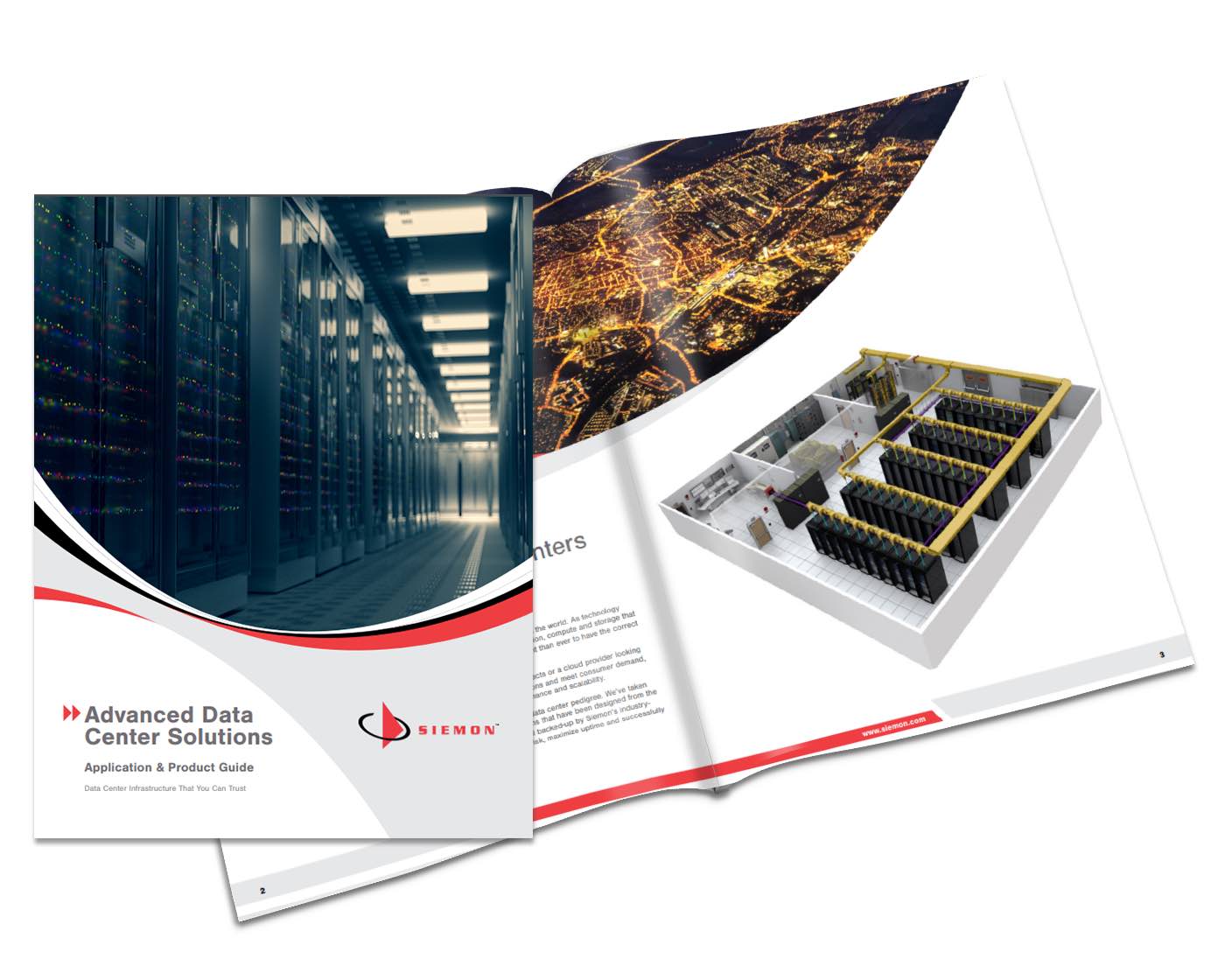
Guide from Siemon provides design advice for next gen data centres
Siemon has announced a new data centre application and product guide designed to provide data centre professionals with comprehensive guidance for selecting, designing and deploying business-critical IT infrastructure in the data centre. The rise of connected technologies and data volumes is driving change in the data centre. New data centre interconnect (DCI) technology, distributed cloud and full-mesh switch fabric architectures in highly virtualised environments result in the need for higher-density and more complex fibre links. Siemon’s guide highlights a range of specialised fibre solutions including high-density fibre enclosures and smaller diameter cables and assemblies that help manage these critical connections in tight data centre spaces. As transmission speeds migrate to 400/800G Ethernet, the guide also highlights recommendations on how to migrate to high-density fibre channels utilising existing infrastructure. 400 Gigabit applications have initially been deployed in cloud data centres for switch-to-switch uplinks. Examples are given of how 400G switch-to-switch links can be deployed using singlemode channels that support Base-8 MTP fibre trunks either with 8 fibre MTP jumpers or with MTP-LC Cassettes and LC fibre patch cords. A 400G switch could then be connected to 4x100G switches using the same Base-8 trunk and a breakout MTP-LC cord. Other examples include 100G switch-to-server downlinks and how they can support breakout to 4x25G channels using direct attach copper cable assemblies (DACs). Also showcased within the guide is Siemon’s comprehensive portfolio of data centre infrastructure solutions, including category 6A shielded copper cabling, pre-terminated and high density fibre patching solutions, automated infrastructure management (AIM) for remote monitoring and real-time view of data centre connections, as well as a new toolless fibre routing system for protecting and routing fibre cabling. Information about the company’s data centre design services completes the guide, plus details of its ecosystem of partners, including Arista and Cisco. “With this new application and product guide we encompass all the support that Siemon can offer to data centre professionals,” explains Alberto Zucchinali, Data Centre Solutions and Services Manager at Siemon. “It provides a single access point to the most relevant information to help data centre professionals identify the right solutions to support a robust, scalable and standards compliant network infrastructure.”


Translate »