Cabling Solutions for Optimised Data Centre Performance


Easier cable management: making smart choices at the outset
By Hermann Christen, Market Development Manager R&M Changing technologies, platforms and user habits have resulted into different cable installation and maintenance practices everywhere: from the outside plant, to building access, to in-building systems. R&M would like to share a few key insights into cabling developments and briefly discuss how certain product and technology choices affect cable rollout, handling, and management. First, the company will examine cabling that runs up to a building, and then take a closer look at cabling inside the building... Cabling outside the building Last mile solutions: making the right choices In the ‘last mile’, branching off drop lines from a main fibre line is more challenging than it might appear. The choice of cable installation method depends on many factors. The application determines how the final section of the last mile cable will be fed into the node. For building access, a choice needs to be made between burying cables directly, blowing them into ducts, or using aerial cables. Cable sheathing' will generally be made of Polyethylene (PE), but the cable construction (beneath the jacket) determines the suitability of a cable for a particular type of rollout. Let’s examine the different types of rollout: Pulling through ducts Key mechanical properties for cables to be pulled are tensile strength and dead weight. PE-sheathed cables have excellent surface properties and sliding properties (low frictional resistance) for this type of application. Buried cables Placing cable in pre-laid ducts is the most economical installation method. The cables can be blown into the duct tubes: features that determine whether cables are suitable for blowing in are low weight, smooth and low friction cable surface. For this type of cable, tensile strength or crush resistance are not of importance. Cables for blowing should be lightweight, slim, relatively stiff, and have an outer sheath with excellent sliding properties. Cables can also be ‘direct buried’ in the earth, without ducts. Such cables need to offer a high level of crush resistance and longitudinal water tightness. High Density Polyethylene (HDPE) sheathing is advisable - PE is sufficiently resistant to all chemical influences that direct-buried cables might conceivably be exposed to. Aerial cables. These are continuously exposed to environmental conditions so requirements are far higher than for buried cables. R&M recommends air cables encased in UV-stable HDPE outer sheathing designed for a temperature range of -25 °C to +70 °C). In aerial drop applications, being all-dielectric and self-supporting are essential. Rodents! One of the greatest threats to cabling (installation cables) is rodents. We can distinguish between two levels of cable protection: ‘rodent secure’ and ‘rodent-protected’. Rodent protected cables prevent damage to the cable core in cases of moderate rodent infestation. The company recommends armoured cables with glass roving (e-glass yarn) which protects the cable core. ‘Rodent-protected’ cables provide protection through mechanical resistance for a prolonged period, which is generally adequate, but not unlimited. Fibre cables can be protected more extensively by adding a layer that ensures rodents aren’t likely to chew their way into the cable core. Steel tape armoured cables are rodent-secure and recommended for outdoor use in ducts and shafts where rodent infestation cannot be prevented. Steel-tape armoured cables are recommended. Harsh conditions Extreme temperatures or chemicals can cause cables to become brittle or less flexible after prolonged exposure or immediately. The cabling sheath may crack, causing rapid deterioration. Fortunately, special sheathing materials can increase resistance to chemical degradation. It is important to know which environmental factors are relevant in different locations and to understand the exact intended usage of cabling and components. In this way, you won’t need to run cable with the most heavy-duty shielding throughout the entire environment. Instead, you can define solutions that offer the best performance where it counts, without compromising in other areas. Important factors to consider include: Chemical load (intensity and duration of chemical influence)Concentration, exposure and temperatureChemical resistance of the material affected Planning for high density The use of data-hungry technology solutions will keep expanding, but the backbone can’t be replaced every few years. High density cabling and network infrastructure are essential to meeting current bandwidth demand challenges. Planning needs to take into account imminent demand increases and the need for more ports and fibre cables at access points as well as in and between data centres. You need cables with a very high fibre count that retain the handling attributes of small cables, with minimal termination-related hassle. Cabling inside the building Automated asset management Automated asset management and tracking makes life much easier. Dynamic environments require ongoing, precise and efficient asset management. Changes to a physical network, including switches, servers and patch panels, can be monitored and traced real-time. A system that offers functions for mapping, managing, analysing and planning cabling and network cabinets can also include asset management, planned and unplanned changes and alarms. Such systems improve operational efficiency and facilitate management of passive infrastructure. An integrated hardware and software system automatically detects when cords are inserted or removed and documents the cabling infrastructure, including connected equipment. Everything can be monitored and administrated from a common software tool. The entire infrastructure is represented in a consistent, up to date database, offering precise, real-time information on the current state and future requirements of the data centre. Without this, developing expansion plans and carrying out risk analyses are impossible, let alone complying with legislation and introducing best practices.   Power over Ethernet PoE has several consequences for cabling choices and handling. Depending on cable diameter, the current 4PPoE standard can produce significant levels of heat. The higher the transmitted power, the more heat is generated. To handle increased temperatures, cable installation conditions (cable type, bundle size, cable duct properties) must be considered and the link length may have to be reduced. Structured cabling standards require the indoor cable to be rated according the Remote Power categories RP 1-RP 3, specifying different levels of PoE support. During connector mating cycles, connecting hardware is exposed to power discontinuation effects. Unmating connections under load will create sparks that can damage connector contacts. The higher the transmitted power, the greater the risk of damage. It’s important to note that robust mechanical mating of wire contacts in connection modules or plugs is crucial. Loose contacts could lead to power interruption and even to burning of plastic parts. The most reliable connection for RJ45 connections is an IDC contact. The ‘Digital Ceiling’ An ‘All over IP’ approach can extend data networks through an entire building’s ceiling in a ‘honeycomb’ fashion, making it possible to connect devices to building automation via zones with pre-installed overhead connecting points (service outlets). Real estate managers or tenants can benefit from ‘Plug and Play’ digitisation without barriers, fast and at low cost. All they need to do is plug in network switches, sensors, controls, WLAN access points and other distributed building services.  Single pair ethernet ‘SPE’ will become a key technology in smart buildings. It is the missing link for connecting devices up to sensor/actuator level by means of a standard Internet protocol (IP). It has the potential to replace existing field bus systems and helps with integration of the Internet of Things (IoT) into the LAN and thus accelerates IP expansion right down to the sensor-actuator level. SPE can replace a large part of existing field bus applications. Introduction of smart, converged networks means energy-conserving technologies and applications can be introduced, such as intelligent management of building space, resources and LED lighting. Don’t forget cable management basics! In spite of numerous changes, the basics of cable management remain unchanged. Bad basic cable management can result in signal interference, damage and failure, resulting in data transmission errors, performance issues and downtime. Always double-check measurements, make sure terminations are of the right quality, test where necessary, always label and colour-code cables, watch out for cramped conduits and make sure no cables or bundles rest upon others.

Structured cabling to be a $23.2 billion market by 2030
The 'Structured Cabling Market Size, Share & Trends Analysis' report has been added to Research And Markets' offering. The global structured cabling market size is expected to reach USD 23.2 billion by 2030 and is expected to expand at a CAGR of 10.5% from 2022 to 2030. The need for advanced technologies has increased the generation of vast amounts of IoT data, which often causes delays and latency. Structured cabling systems help enhance data transfer speed, which further aids in avoiding delays. The presence of a high connectivity network in regions such as North America has facilitated the widespread adoption of structured cabling systems. Thus, the North American market is expected to witness substantial growth over the forecast period. Additionally, an expanding communication network architecture and a rise in demand for data centres have increased the demand for structured cabling systems. Asia Pacific is projected to register the fastest growth rate over the forecast period. The regional market is predicted to grow as a result of key factors such as government measures to promote digitalisation, upgraded facilities, population increase, faster adoption of smart devices, and investments in cloud and IoT technologies. Structured cabling systems are used across various verticals such as government, industrial, IT and telecommunications, residential, and commercial. The IT and telecommunication segment is expected to exhibit the highest CAGR over the forecast period owing to data centre convergence in technologies supporting data and voice services. An increase in the usage of mobile Internet with high-speed connectivity is expected to bolster the market growth. Building smart cities and residences will also play a significant role in expanding the worldwide market potential. To expand their product portfolio and maintain a strong position in the market, players have used tactics such as expansions, agreements, partnerships, and joint ventures and are engaging in the creation of new products with high speed and better features. Companies have also received official authorisation for the launch of devices that provide high speed and security. Structured Cabling Market Report Highlights By product type, the fibre optic cables segment is estimated to grow over the forecast period, owing to the increasing importance of cloud computing and high bandwidth applications. On the basis of application, the data centre segment is expected to register a significant CAGR of 11.0% over the forecast period owing to the increasing demand for smart devices and the rising usage of mobile data. Based on vertical, the IT and telecommunication segment dominated the market in 2021 and this trend is expected to continue over the forecast period. Due to the increasing development and usage of automation techniques across industries, the industrial vertical segment is likely to grow rapidly in the forecast period. The North American region led the market in 2021 and the trend is expected to continue over the coming years owing to a rise in demand for data centres and the growth of communication network infrastructure.

Schaffner introduces FN2500 / FN2640 EMC filter series for data centres
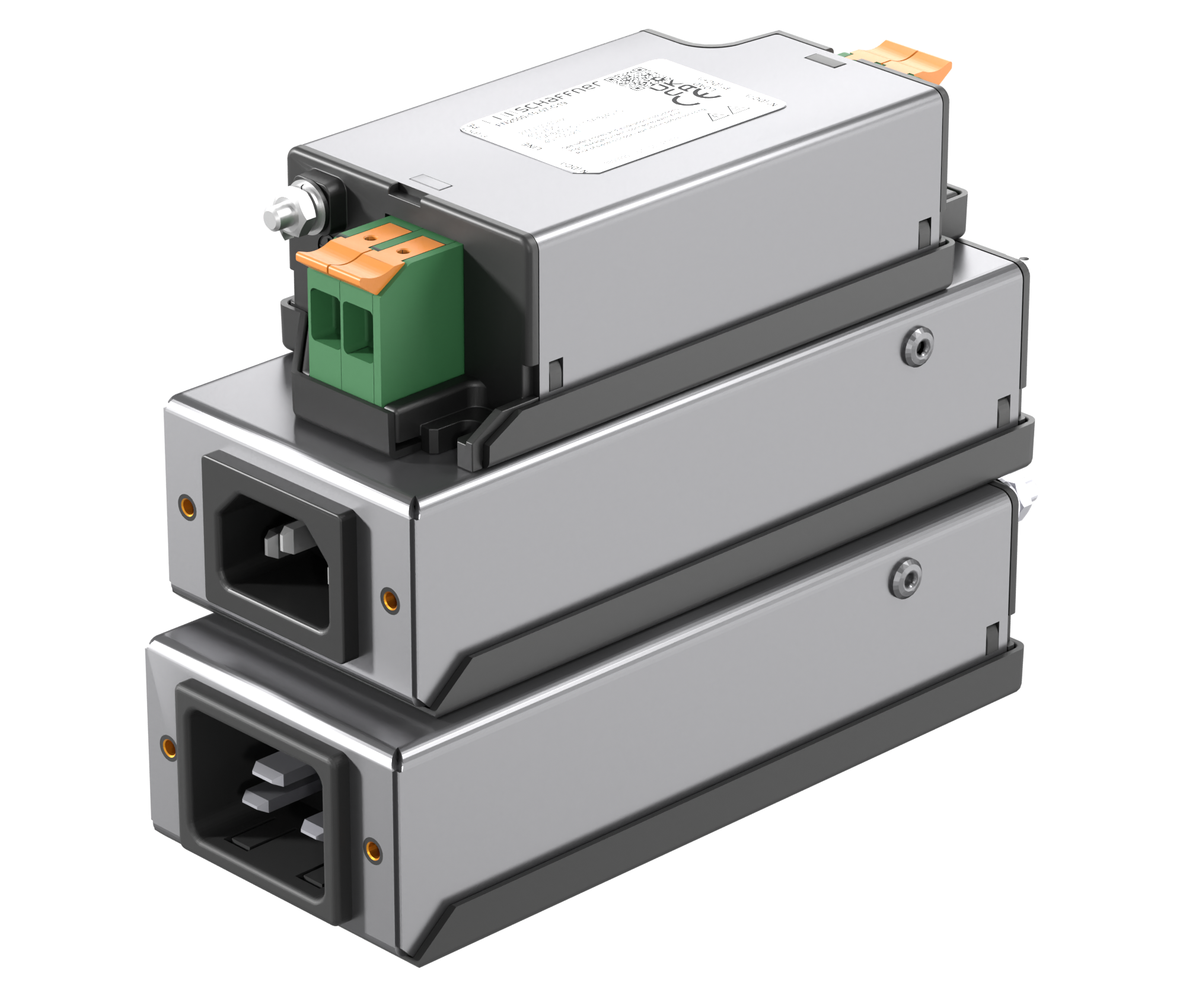
Schaffner has announced the availability of the new FN2500 / FN2640 - EMC filter series for robotics and data centres. The new filters have been developed to meet the specific needs of these two important and growing markets. These markets have technical requirements in common that can now be met by these new EMC filters. Many applications, including robotics, data centres and autonomous machines require power supplies to be mounted in 19in rack cabinets. To accommodate this and provide systems builders with seamless integration, Schaffner has packaged the FN2500 / FN2640 EMC filter series in a space saving 1U rack-mount design. The new FN2500 / FN2640 EMC filters are available with a range of connection options. These include IEC C14 (10-15A) or IEC C20 (16-20A) input connectors for direct mains connection and with a range of output connectors. For internal assembly connection options available on input and output include push-on terminals, cable glands, screw terminals or spring terminals. Key standard features include input voltage 250 VAC at DC to 60 Hz (FN2500 277 VAC / 400 VDC), output current 10 to 20 A at 40°C, MTBF > 300,000 h and operating temperature range -40°C to +100°C (with derating >40°C). The new FN2500 / FN2640 EMC filters meet the requirements of IEC 62368-1 - Audio/Video, Information and Communication Technology and equipment and IEC/EN 60335-1 - Household and similar appliances, Climatic Category 40/10 0/21 to IEC60068-1, Certified to UL 60939-3, IEC/EN 60939-3, GB/T 15287 and Protection category IP00 / IP20 for -103 terminals.

Over 100,000 homes in Coventry now have access to CityFibre’s network
CityFibre has reached a major milestone having passed over 100,000 homes in Coventry, the first time CityFibre has reached this landmark in a single location. Thousands of residents in Coventry can now enjoy affordable, gigabit-capable reliable full fibre broadband from a range of internet service providers (ISPs) including launch partner Vodafone, TalkTalk, Zen, Fibrehop and IDNet, with Giganet expected to join the network soon. Construction began on the £72.5m project in November 2018 and CityFibre has since laid almost 1,500km of dense full fibre infrastructure across the majority of the city. In Ofcom’s latest Connected Nations report, Coventry was ranked second in the UK for its digital connectivity. The full fibre network currently services every building run by Coventry City Council, as well as its traffic management systems, CCTV systems and public WiFi across the town centre. The network has been integral to the delivery of numerous digital events as part of Coventry’s year-long City of Culture and Commonwealth Games events. It also provided ultrafast access to festivalgoers and production teams at Radio 1’s Big Weekend. A report by the consultancy Hatch, commissioned by CityFibre, found Coventry stands to experience significant economic, social and environmental benefits from its new digital infrastructure platform including over £895m in productivity and innovation gains and £197m from a widened workforce over a 15-year period. Enabling 5G rollout alone could drive up to £2bn in positive economic impact. Leigh Hunt, Area Manager for Coventry at CityFibre, says: “Our rollout has helped transform Coventry’s digital capabilities for both residents and businesses, making it one of the best-connected cities in Britain. Passing 100,000 homes is an incredible feat and a real testament to CityFibre’s mission to create a legacy of reliable connectivity. “Digital infrastructure has become the cornerstone of modern day-life, and CityFibre’s investment will accelerate economic opportunity to propel Coventry into a new digital-era fit for generations to come.” Councillor Richard Brown, Coventry City Council Cabinet Member for Finance, comments: “Access to a better and faster digital infrastructure is making a massive difference to local people and businesses. “Not only is CityFibre installing a fantastic, future-proofed fibre network, it is also making it more competitive for internet suppliers – meaning people and businesses can benefit from some great deals for their internet connections. “I am really proud of the partnership we have with CityFibre and the benefits that this brings for the city.” Paul Ward, Head of ICT & Digital at Coventry City Council, adds: “It’s brilliant that CityFibre has reached this milestone. This has directly contributed to Coventry being one of the best digitally connected cities in the country as measured by the Ofcom Connected Nations report. CityFibre is a key partner with the city council in pushing forward our ambitious digital strategy plans and helping establish Coventry as a leading digital city directly supporting the One Coventry Council Plan.”

CityFibre investing £23m in High Wycombe to deliver full fibre rollout
CityFibre has named High Wycombe as the next UK town in line for a multi-million-pound investment in its digital infrastructure – a move that will see it join the nation’s growing list of full fibre enabled communities. CityFibre is investing £23m in a new town-wide network that will bring fast and reliable full fibre-enabled internet services within reach of almost every home and business in High Wycombe. Construction work on the full fibre network will start in June in West Wycombe, with Instalcom appointed as build partner. As work is completed in each neighbourhood, CityFibre will designate the homes ‘ready for service’, which means residents can choose to connect to full fibre-enabled broadband services when they go live in their area. Nationally, CityFibre is building new and better digital infrastructure for up to eight million homes and businesses through its up to £4bn Gigabit City Investment Programme. Full fibre networks, unlike many of the copper-based ‘fibre broadband’ services available today, use 100% fibre optic technology to carry data at light speed all the way from the home to the point of connection. This gives users speeds of up to 1,000 Mbps for upload and download (up to 1,000 Mbps), near limitless bandwidth and connectivity users can depend on. A full fibre connection also goes far beyond simply enabling access to the latest entertainment at lightning speed. As an essential digital utility, full fibre boosts households and businesses alike, with experts saying it will drive a range of economic benefits, such as making us more productive and innovative. As Area Manager, Neil Madle will lead the delivery of the High Wycombe project. He will be responsible for ensuring works are delivered efficiently and considerately, while also acting as the main point of contact for all stakeholders. Neil says: “The next chapter in High Wycombe’s story starts here. Our builders will soon get to work on a town-wide full fibre network – and we think people will be blown away by the difference it will make, both now and for generations to come. We cannot stress the importance of digital connectivity and the major benefits it will reap now and long into the future and can’t wait for residents and businesses to enjoy the results.” Speaking of CityFibre’s full fibre rollout plans for High Wycombe Peter Strachan, Cabinet Member for Planning and Regeneration at Buckinghamshire Council comments: “We welcome the strategic investment CityFibre are making in High Wycombe. A full fibre infrastructure will help businesses and residents right across the town to unlock the power of full fibre connections which offer unrivalled speeds. Full fibre connections carry data at light speed all the way directly from the home right through to the point of connection. These kind of speeds boost households and businesses alike, whether it’s a case of enabling access to the latest entertainment at lightning speed or helping to unleash productivity and innovation in local businesses. By offering such superfast speeds the City Fibre network could help transform the digital lives of around 125,000 people in High Wycombe.”

Immediately recognise every cable, server and component
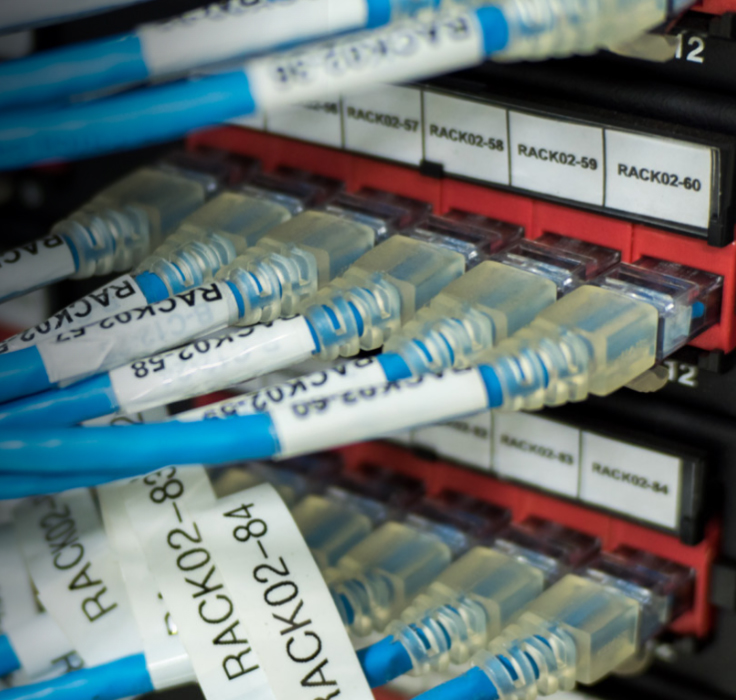
Not a single server cable will require manual tracing during installation, network refreshes and troubleshooting when identified with reliable Brady labels for error-free data centre intervention. Quickly recognise the right hardware for fast and error-free data centre interventions. Rely on Brady’s industrial grade labels that remain legible, and stay attached to any cable, disk, panel, rack, router, switch and server. Discover Brady's dedicated data centre identification solutions and get the free data centre identification guide! Solve identification challenges Fast reconnects at all times: quickly connect cables to the right ports with reliable labels that stay attached and remain legible. Total control: print any label in the data centre or at any location when you need it. Fast support and quality service: get a globally available product with dedicated local service and technical support. Data centre identification guide book Digitisation accelerates across many industries, and data centre capacity is keeping pace. Increasing needs for security, speed and capacity result in expansion, modernisation, relocation, higher server and router port densities and variable panels. All of this will require flexible identification solutions that support highly efficient data centre professionals to deliver their best work fast. The specialised guide offers a high-level overview of the identification solutions Brady offers to data centre customers.

CityFibre partners with Deepomatic for Visual Automation Technology
CityFibre has partnered with Deepomatic to deploy its Visual Automation Technology across CityFibre’s national network by the end of 2022.   The industry-leading image recognition and AI technology supports CityFibre’s engineers by automating field-based quality-assurance capabilities at scale. This will help ensure CityFibre’s build, maintenance and installation work continues to meet the highest quality standards as it accelerates to serve 8 million homes by 2025.   For CityFibre’s service provider partners, the completed deployment of this technology from Fibre Exchange to secondary node, will bring further assurance that when a broadband service is ordered, the end-to-end network is verified as fully operational. The result will be a fast and friction-free end-customer install experience while further improving CityFibre’s industry-leading ‘Right First Time’ service installation rates. CityFibre’s engineers use the app-based interface to upload images of network build, upgrade or maintenance-related work prior to closing a job. The images are then analysed in real time to either validate the work as complete or highlight issues that need addressing before leaving the site. The visual record and any associated notes are then stored to provide a searchable history of build information and maintenance activities that can be accessed on-demand by CityFibre’s network management and quality assurance teams. Deepomatic’s technology is the only Visual Automation solution specifically designed for the telecommunication industry. By implementing it throughout its end-to-end build operations, CityFibre will achieve the deepest integration of the technology across any UK network. Beyond this, CityFibre is evaluating the potential for its use during the final installation of services to customer premises. An initial pilot enabled CityFibre to implement the platform, test its live use and gather the feedback needed to deploy in the most efficient way. Nationwide rollout is now underway, with the technology already used across CityFibre’s Midland and Southern regions.   David Tomalin, Group Chief Technology Officer at CityFibre, says: “Deepomatic’s Visual Automation Technology is a key part of the Better By Design approach to deliver a world class network and service experience for our partners and their customers. It is helping us ensure quality standards are consistently met, reducing human error while empowering our people, and minimising repeat engineer visits. As well as delivering operational efficiencies and customer benefits from day one, it will enrich our network asset and records management over time, support predictive analysis work and inform our future network upgrade decisions.”  Augustin Marty, CEO at Deepomatic, comments: "CityFibre is currently at the forefront of providing the new generation of Full Fibre infrastructure for the UK. We are delighted to support their visionary team in scaling quality and reliability to new heights. Thanks to visual automation, CityFibre will roll out fibre technology in a much faster way, grasping all the insights it needs to deliver an operationally premium network.”

Prysmian launches Flexibox range of innovative enclosures
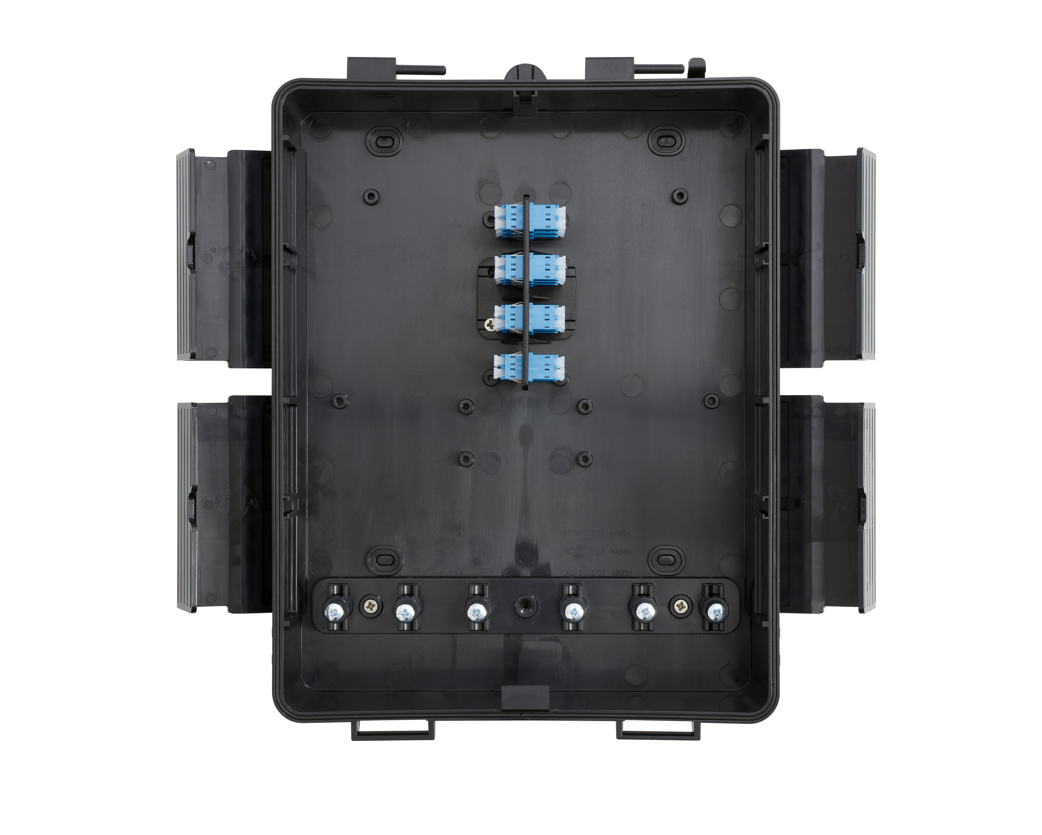
Prysmian Group has launched the innovative Flexibox range of compact and flexible enclosures for internal and external Fibre-to-the-Home (FTTH) and Fibre-to-the-Antenna (FTTA) applications. For FTTH applications, Flexibox is available for the termination of fibre in various combinations including: splice only, pre-terminated fibre, and splice and patch versions. Each configuration is designed to enable the unit's fast deployment through easy customer installation and connection. In the case of a multiple dwelling unit, Flexibox is suitable for use as a basement box. It can accept an external cable for splicing to the individual drop cables, which can be done as a point-to-point solution or through the use of splitters. For FTTA applications, Flexibox is available in a variety of configurations including fibre only, power, and hybrid fibre/power to enable the termination of hybrid cables faster and more cost effectively. The fibre/power hybrid box has been designed to enable the termination of Prysmian's FTTA hybrid fibre and 48V DC power cables to ensure the efficient delivery of power and fibre to remote radio heads. The single termination process reduces installation time and cost, making it ideal for the deployment and densification of antennas needed for 5th Generation mobile network. In addition, the Flexibox can be used as a power or fibre primary distribution point to enable up to 10 drops to antennas for connection with fibre and power utilising off-the-shelf DIN rail-mounted products. Depending on application, Flexibox is available with external IP ratings for ex-ternal wall/pole-mounting. Nathan Paddick, Prysmian Group UK Telecom Connectivity Design Manager, explains the versatility of the new enclosure, he says: "Flexibox has been designed with multiple network architectures and practices in mind to offer off-the-shelf customization and flexibility with a standardised installation practise, all from the same product". Flexibox is available directly from Prysmian or through distributors in the UK.

Certified Outside Plant Technician program
The five-day Certified Outside Plant Technician (COPT) program launched by CNet is a comprehensive program perfect for those with 2-3 years’ experience working in the network infrastructure sector who wish to extend their knowledge, practical hands-on skills, qualifications and certifications into deployment of fibre optic connectivity in the external environment. Learners can take their existing network cabling knowledge and skills to the next level by gaining valuable insight into external fibre network distribution strategies, infrastructure components and installation methods. Passive Optical Networking (PON) features heavily as the primary delivery technology for fibre broadband to the home. Methods used for distribution will also feature, exploring the benefits and rationale behind the choice to distribute services underground or overhead. The COPT is a combined program split into 30% theory and 70% practical learning. Focused practical hands-on sessions including the implementation of in-line splicing, high fibre-count distribution, Multi Dwelling Unit (MDU) cabinet installation and customer connection drops. Blow fibre practices also feature in the COPT program. Successful completion of the Certified Outside Plant Technician (COPT) program provides the learner with an internationally and industry recognised Level 4 BTEC Award, official COPT certification, use of a post nominal title and a digital badge. A digital badge can easily be shared via social media and downloaded to verify knowledge, skills and certifications gained, it therefore adds valuable credibility to individuals’ professional profiles.  The COPT program forms part of the globally renowned Digital Infrastructure Education Framework which maps technical education programs, official certifications and internationally recognised qualifications to knowledge and career progression routes throughout the industry, providing designations that have become key skills reference points that allow those holding them to clearly demonstrate their ability and experience. Andrew Stevens, CEO at CNet Training, adds, “The Certified Outside Plant Technician (COPT) has been designed and launched as a result of our customer demand. Big data is only getting bigger, with the dramatic increase in smart technology devices, smart homes, smart building and cities, it’s putting a significant demand for wider network accessibility. Improvements in wireless technology and the increased deployment of wireless access points along with the rollout of small-cell technology (5G) aims to meet the growing demand for access. Underpinning all of this, as well as the UK government strategy for a ‘full fibre broadband’ access, is the need for significant growth in the national fibre optic network structure. The COPT provides the learner with the skills and increased technical knowledge to take their existing network cabling skills to the next level by gaining valuable insight and wider understanding of fibre network complexity and external fibre network distribution strategies, infrastructure components and installations methods.” 

CNet Training launches the first government funded apprenticeship for network cable installation
CNet has announced the launch the first government apprenticeship within the network cable infrastructure sector across England and Wales. The company says it has fully planned and prepared the content of the CNCI Apprenticeship which provides both the apprentice and employer with a full itinerary of activities to follow and implement. It introduces the concept of an ‘apprenticeship in a box’, designed to take care of the time-consuming planning often associated with apprenticeships and on-going professional development.  The CNCI apprenticeship has been put together as the result of a close collaboration between major companies from the network cabling sector. It recognises network cable installation as a role and provides industry approved certification which standardises technical education for network cable installers. The apprenticeship is available to all across England and Wales, with the apprentice benefitting from on and off-the-job training and activities such as mentoring, shadowing, internal training and specialist external education programs. Apprentices must pass a practical assessment and professional discussion to successfully complete the CNCI apprenticeship, which ensures that the learner is fully competent and ready to work independently within the industry.  On successful completion of the apprenticeship, learners will be able to confidently install, test and certify copper and fibre optic cable installation across a variety of environments, working to the correct standards and best practices. Learners will also be taught how to install with confidence and competency smart building technology including wireless access devices, CCTV cameras, door access controls and biometric security systems. Andrew Stevens, CNet Training’s CEO, says, “The network cable infrastructure sector is beset with significant skills shortages. The Certified Network Cable Installer Apprenticeship has been long awaited and is a significant event within the sector. The CNet team has worked incredibly hard to get this off the ground and approved. It’s a massive step forward in the sector and I hope by offering this ‘Apprenticeship in a Box’ concept it will motivate companies looking for new junior recruits to train as everything is ready for the learners to just get going and start learning straight away. The Apprenticeship will inspire a generation and encourage them into the sector by offering a career opportunity following school education. A benefit of the Apprenticeship is that it will ensure that all learners are trained, educated and certified properly from day one and therefore gives them a great starting point to a great career in the sector.”


Translate »