Tecnair launches new CDUs for data centre cooling
Author: Joe Peck

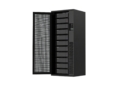
Tecnair, a manufacturer of close control air conditioning units for data centres and a Panasonic company, has introduced a new range of coolant distribution units (CDUs) designed for high-density artificial intelligence and high-performance computing (HPC) data centres.
The systems were presented at Data Centre World London 2026, held on 4–5 March, and are intended to support liquid cooling deployments as computing densities increase.
Rising AI workloads are pushing rack densities beyond levels typically supported by traditional air cooling. The CDU range has been developed to support liquid cooling architectures, including direct-to-chip and immersion cooling, helping data centre operators manage higher thermal loads.
The units are designed for environments where rack densities regularly exceed 50kW and are approaching 100kW.
Liquid cooling for high-density infrastructure
The CDU range is available in capacities of 400kW and 800kW and can be deployed across a range of environments, from edge facilities to hyperscale data centres.
The systems include redundant components such as pumps, power supplies, and sensors to support continuous operation in mission-critical environments. A failover capability is also included to maintain cooling during maintenance or component failure.
According to Tecnair, the units can achieve partial power usage effectiveness (pPUE) values as low as 1.02 through the use of free-cooling coils and micro-channel heat exchanger technology.
Monitoring functions are integrated through Modbus building management system connectivity, enabling real-time visibility of parameters including temperature, pressure, flow rate, water level, and leak detection.
The CDU range is designed to integrate with Panasonic cooling systems, including free-cooling chillers using R1234ze refrigerant with a low global warming potential.
These chillers use outside air temperatures, down to -10°C, to generate chilled water through a free-cooling function, supporting improved energy efficiency in suitable climates.
For more from Tecnair, click here.