Data Centre Operations: Optimising Infrastructure for Performance and Reliability


Armada begins European AI infrastructure production in Dublin
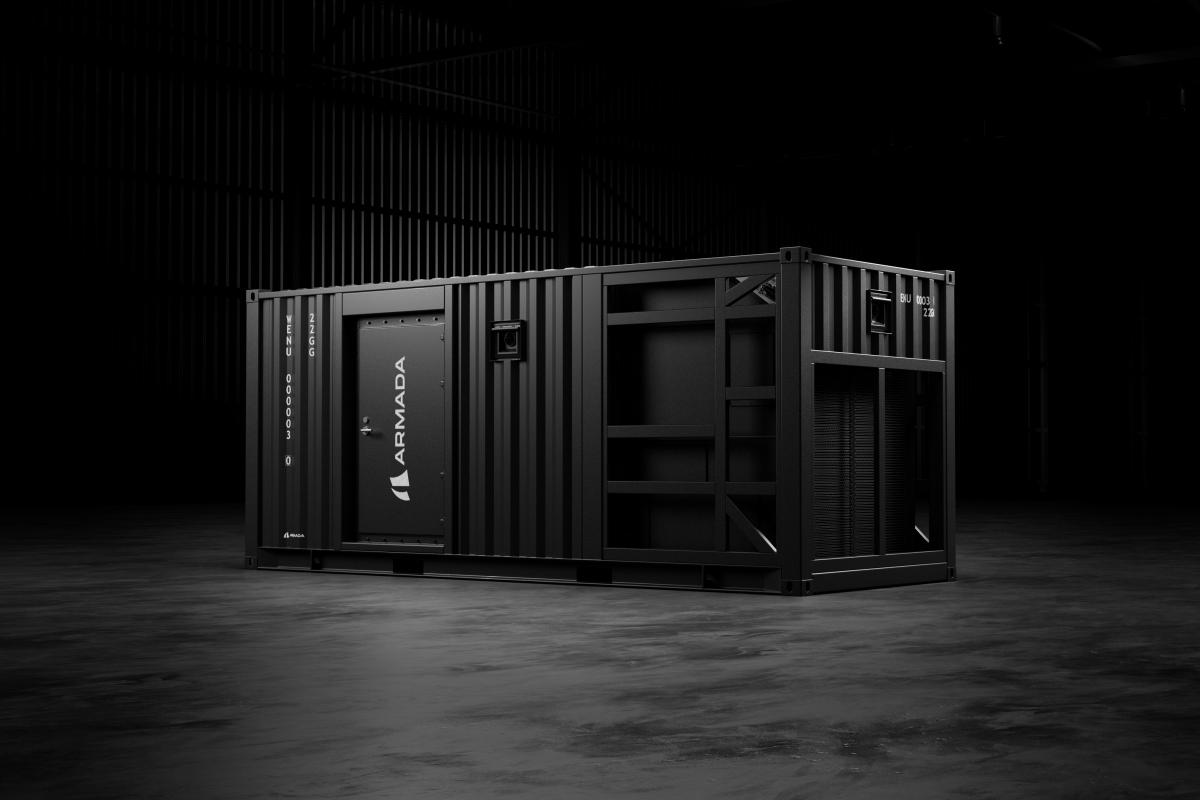
Armada, a US provider of modular edge data centres and connectivity for remote sites, and Johnson Controls, a global provider of smart building technologies, have begun production at Galleon Forge Two, a manufacturing facility in Dublin, Ireland, producing modular data centre infrastructure for sovereign AI deployments. The facility is Armada's first European manufacturing operation and the second Galleon Forge established at a Johnson Controls site, following Galleon Forge One in Gilbert, Arizona, USA. The companies marked the start of production with the completion of the first Dublin-built Leviathan, a modular data centre with multi-megawatt capacity destined for Fossefall in Norway. The unit was engineered, integrated, and tested at the Dublin facility. Leviathan combines Armada's computing infrastructure and software with Johnson Controls' thermal management technology and manufacturing capabilities. Its thermal systems include coolant distribution units, chillers, and building controls, alongside cooling technologies designed to reduce water consumption, energy use, and noise. Manufacturing capacity expands across Europe Galleon Forge Two occupies 90,000ft² (8,361m²) at Johnson Controls' Dublin manufacturing site and is supported by approximately 700 engineers, technicians, and other skilled workers. The operation is also expected to involve additional roles across the European supply chain. The first Galleon Forge, located in Gilbert, Arizona, is expected to begin continuous production in early 2027. The facility will cover up to 400,000ft² (37,161m²) and support more than 500 jobs, with further employment across the domestic supply chain. Armada also plans to expand manufacturing at a Johnson Controls site in Edmonton, Canada. The manufacturing model is intended to allow countries and regions to produce sovereign AI infrastructure domestically, using local workforces and supply chains. “The speed of the sovereign AI revolution requires a new approach to meet demand,” says Dan Wright, co-founder and CEO of Armada. “The Galleon Forge model keeps producing and it’s designed to keep expanding. We can now deliver to any nation or organisation that needs advanced computing infrastructure manufactured within its own borders, owned and controlled on its own terms.” Austin Domenici, President of Global Data Centre Solutions at Johnson Controls, adds, “We’ve been building modular infrastructure for nearly two decades. What’s different today is the scale, density, and speed AI demands. "With Armada, we’re combining that experience with our thermal expertise and manufacturing scale to complete more of the complex integration work in the factory and bring compute online faster and more predictably.” Leviathan operates using the Armada Platform, which manages power, cooling, and computing across individual units and supports open-source and proprietary AI models. Customers own the infrastructure and retain control of its operation without relying on an external cloud provider. Through the Armada Sovereign SI Grid, multiple Leviathan units can operate as a fleet. Initial deployments in Norway and Australia Norwegian company Fossefall has ordered five Leviathan modular data centres, with combined capacity exceeding 9MW. Deliveries are scheduled to be completed by the first quarter of 2027, beginning with the unit produced in Dublin. Øyvind Vesterdal, CEO of Fossefall, comments, “Europe needs more advanced computing infrastructure, and the focus now needs to be on getting projects built. “Working with Armada and Johnson Controls gives us a more standardised and modular approach to deployment. This can help shorten timelines and make projects easier to develop in close cooperation with local communities. With access to clean energy, political stability, and a suitable climate, the Nordics are well positioned for large-scale AI infrastructure.” In Australia, WinDC plans to deploy 11MW of modular data centre capacity across renewable energy sites, locating computing infrastructure close to wind, solar, and battery generation. “Australia's energy transition depends on building AI infrastructure in the right place, where the renewable energy is, rather than waiting for a grid that can't scale fast enough to carry it,” notes Andrew Sjoquist, founder and CEO of WinDC. “Leviathan lets us bring compute directly to clean power and scale it with the workload.” For more from Armada, click here.

Multiverse Computing, YellowDog target European sovereign AI
Multiverse Computing, a Spanish company specialising in compressing large language models (LLMs), and UK cloud workload orchestration firm YellowDog.ai have agreed to work together to improve compute efficiency and support the development and deployment of European sovereign AI. The collaboration will combine AI model compression with hybrid and multi-cloud compute management to help enterprises, research organisations, and public sector institutions operate AI within European infrastructure. Multiverse Computing’s CompactifAI technology uses quantum-inspired tensor-network methods to compress large AI models, while YellowDog.ai provides a platform for managing compute resources across hybrid and multi-cloud environments. The companies say they aim to bring together processing capacity, secure access, storage, networking, and data centre operations, whilst simultaneously reducing costs, energy consumption, and infrastructure complexity. They also identify GPU shortages as a key challenge, particularly for European organisations seeking to make more efficient use of available capacity. Customers will be able to use the combined capabilities for model development, benchmarking, optimisation, compressed model deployment, inference, and sovereign infrastructure planning. Target sectors include financial services, life sciences, advanced engineering, energy, telecoms, public services, and defence-adjacent industries, where data residency, security, cost, compute availability, and regulatory compliance are important considerations. Supporting Europe's AI compute infrastructure Enrique Lizaso, co-founder and CEO of Multiverse Computing, says, “Sovereign AI will only succeed if it is economically and technically sustainable. Our compressed AI models are designed to run faster, use less energy, and operate closer to the data. "Working with YellowDog.ai gives customers a powerful route to deploy efficient AI across cloud, on-premises, edge, and sovereign data centre environments.” Bruce Beckloff, CEO of YellowDog.ai, adds, “Europe has the talent, data, and industrial base to lead in AI, but it needs infrastructure that is fast, efficient, secure, and sovereign by design. “By partnering with Multiverse Computing, we are creating practical capacity solutions where organisations can scale compute intelligently, reduce bottlenecks, and retain control of critical workloads.” The agreement comes as European organisations seek alternatives to fragmented, expensive, and capacity-constrained AI infrastructure. The companies also point to the European Commission’s AI Gigafactory initiative, which envisages large-scale facilities providing computing capacity for the development, training, fine-tuning, and deployment of advanced AI models and applications. These facilities are expected to combine AI-optimised computing, secure cloud access, high-capacity storage, advanced networking, energy-efficient data centres, and specialist support services. The stated priorities include improving access to hybrid compute, reducing operational costs and energy use through model compression and workload scheduling, and supporting deployments that meet European requirements for data protection, security, and technological autonomy. For more from Multiverse Computing, click here.

Schneider Electric unveils modular AI data centre design
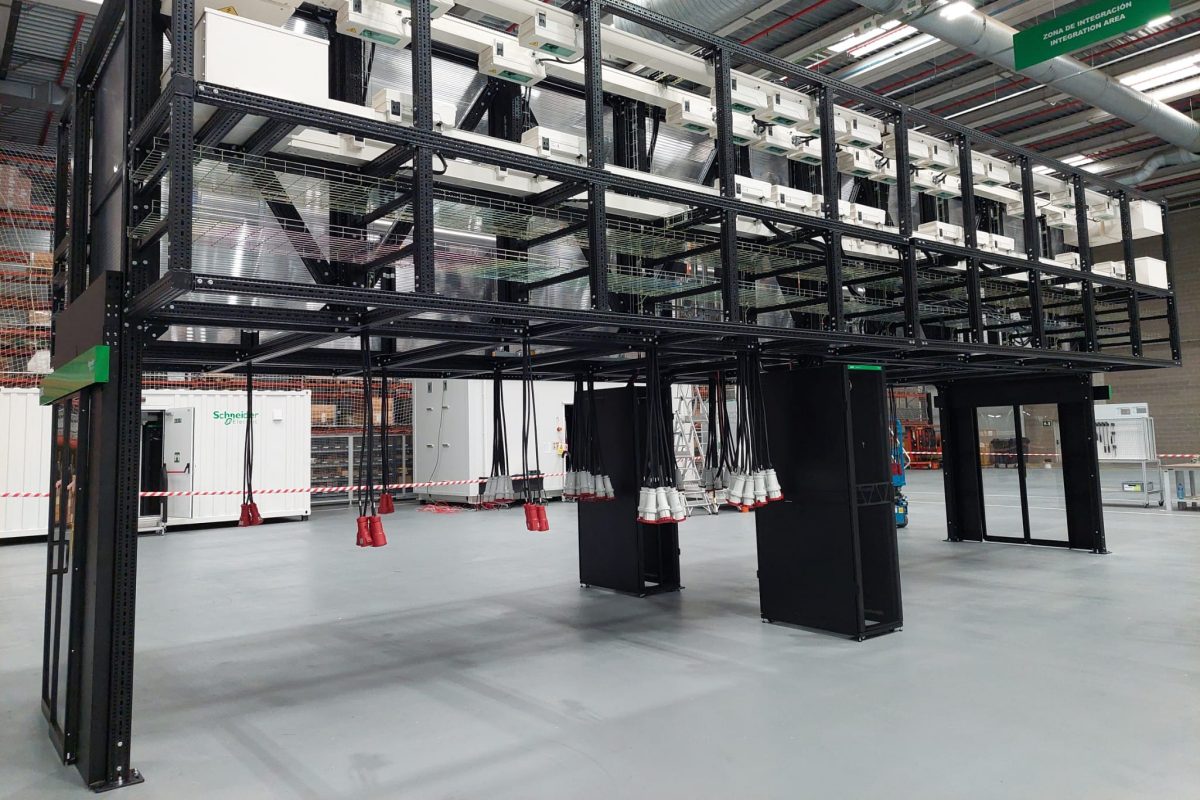
Global energy technology company Schneider Electric has introduced its RapidScale Modular Data Centre Reference Design 115, a pre-engineered blueprint for high-density AI infrastructure based on the NVIDIA Vera Rubin platform. The reference design combines power, liquid cooling, IT, software, and lifecycle services to support the repeatable deployment of AI data centres. It uses liquid cooling and temperature controls to manage heat and power consumption in high-density computing environments and is also intended to simplify site logistics and reduce the need for bespoke engineering. Prefabrication cuts installation time Research co-authored by Schneider Electric and hyperscale developer Compass Datacenters, Prefabricated White Space Module Time Study: Lessons from a High-Density Liquid-Cooled Deployment (White Paper 238), reports that prefabricated modular IT pods reduced on-site installation time from 75.5 hours to 15 hours per pod, an 80% reduction. Adil Attlassy, Chief Technology Officer of Compass Datacenters, explains, “The white space brings together the greatest concentration of systems and trades in the smallest footprint, with each installation dependent on the one before it. "Working jointly with Schneider Electric, we engineered a prefabricated module that integrates these systems into a single assembly, eliminating the need to coordinate multiple scopes of work on site. "By reducing on-site installation time by 80%, we accelerate deployment and help our customers bring their workloads online sooner.” Standardised infrastructure for AI factories The RapidScale approach combines pre-engineered designs with a supply chain spanning eight primary manufacturing sites, covering 1.35 million ft² (125,000m²), alongside three additional facilities and 12 partner sites across 10 countries. Schneider Electric says its manufacturing capacity has grown fourfold since 2025 and that around 90% of the equipment incorporated into RapidScale is manufactured in house. The reference design is intended as an initial step towards supporting the NVIDIA DSX POD reference design, which enables factory integration and validation of AI infrastructure before shipment. It has been validated to ANSI standards for US deployments, with plans to extend the framework to IEC standards for international use. Manish Kumar, Executive Vice President, Secure Power and Data Centres at Schneider Electric, notes, “As AI infrastructure scales at unprecedented speed, customers need solutions that are standardised, reliable, and deployable with certainty. "Through our portfolio of reference designs and prefabricated solutions, combined with global supply chain strength and lifecycle expertise, we help AI factory operators accelerate time to value while building the resilient infrastructure required for next-generation compute.” For more from Schneider Electric, click here.

Armada, Johnson Controls plan 500MW AI infrastructure rollout
Armada, a US provider of modular edge data centres and connectivity for remote sites, plans to work with Johnson Controls, a global provider of smart building technologies, to build 500MW of distributed sovereign super intelligence (SI) infrastructure in 2027, using factory-integrated systems based on NVIDIA’s DSX POD reference design and Vera Rubin platform. Announced at NVIDIA GTC, the collaboration will combine engineering, manufacturing, and deployment to deliver modular infrastructure with cabling, wiring, piping, and functional validation completed before shipment. Factory-built infrastructure aims to accelerate deployment The NVIDIA DSX POD reference design moves repeatable construction work from data centre sites into factories. Compute, networking, rack-level power, plumbing for liquid cooling, and supporting infrastructure are integrated and validated before delivery. On site, the containers are connected to prepared power, water, cooling, and networking infrastructure, with capacity expanded by adding standardised units. Armada will use NVIDIA DSX Air to simulate AI factories and validate its Bridge GPU management software before shipment. Once deployed, NVIDIA DSX MaxLPS will help manage power and workloads to maximise computing throughput within each site’s available power capacity. Dan Wright, co-founder and CEO of Armada, says, “The SI race isn't going to be won by whoever pours concrete the fastest. Companies and nations can have the chips, the land, the power, and the ambition and still be told to wait years for a building. "The NVIDIA DSX POD reference design lets us cut that wait out of the equation. We build the SI factory in one of our Galleon Forge factories, ship it, connect it, and our customers are generating tokens in months on infrastructure they own and control.” Distributed capacity for sovereign AI Armada says conventional 50MW facilities can take years to become IT-ready and require around 600,000 on-site labour hours. It also cites a projected construction workforce shortfall of 288,000 workers by 2027 as a challenge to expanding capacity. The company plans to deploy modular SI facilities close to energy sources, including stranded, renewable, and off-peak power. Its proposed architecture is designed to operate without cloud dependencies, allowing customers to retain control of their models, data, and infrastructure. Charlie Boyle, Vice President of DGX Systems at NVIDIA, notes, “The demand for compute is outpacing the speed at which the world can build the facilities to house it. "By utilising the NVIDIA DSX POD reference design, Armada can deliver factory-built, Vera Rubin-based containers to customers. Together with Johnson Controls, Armada is positioned to bring Vera Rubin-based factories to customers who need capacity now, wherever their energy and data are.” Manufacturing partnership Armada brings experience deploying modular data centre infrastructure in remote and challenging environments, including Alaska, a US Navy littoral combat ship, and desert locations in the Middle East. The company says its manufacturing and deployment capabilities will support the planned rollout, with Johnson Controls contributing thermal management technology, engineering, and global manufacturing capacity. Joakim Weidemanis, CEO of Johnson Controls, comments, “NVIDIA is rapidly advancing the age of intelligence and reshaping the infrastructure required to support it. "Our collaboration with Armada combines their expertise in deploying compute at the edge with Johnson Controls' advanced thermal management technology, engineering capabilities, and global manufacturing scale. This combination delivers high-performance infrastructure engineered to quickly bring capacity online where and when it's needed.” Under the collaboration, NVIDIA will design, test, and validate the DSX POD reference design for the Vera Rubin platform, whilst Armada will engineer, manufacture, integrate, customise, service, and deliver the modular data centres.

Rimac, Ecoblox develop AI data centre power systems
Rimac Technology, a Croatian supplier of electric vehicle batteries, powertrains, and software, and Ecoblox, a provider of modular data centres for AI and high-performance computing, have signed a joint development agreement to develop a modular data centre incorporating battery storage and power electronics technology for AI infrastructure. As demand for AI and high-performance computing increases, the availability of power, cooling capacity, and suitable deployment space is becoming an increasingly important consideration for data centre development. The companies say they aim to address these requirements through an integrated modular design for high-density workloads. The modular data centre will incorporate Rimac Technology’s UNI battery modules, alongside a battery management system (BMS) that provides real-time monitoring and control. Telemetry will feed into Ecoblox’s data centre infrastructure management (DCIM) platform, providing centralised monitoring, alarms, and analytics. The design also integrates power conversion, uninterruptible power supply (UPS) systems, precision cooling, and IT infrastructure within a single modular footprint. The companies say the battery system is intended to improve serviceability and extend backup power duration for critical computing equipment. Battery technology integrated into modular infrastructure Rimac Technology’s battery modules were developed for automotive applications and incorporate thermal management and safety features. The companies are now applying the technology to AI infrastructure, where power density, thermal management, and reliability are key considerations. Ecoblox, an NVIDIA Preferred Partner, provides modular data centres and GPU infrastructure integration, including cluster design, procurement, installation, and managed services. Its offering includes prefabricated air- and liquid-cooled enclosures, DCIM software, and high-performance computing and GPU-as-a-service platforms. Ecoblox says its infrastructure can be deployed in six to eight months, allowing cloud providers, enterprises, and sovereign computing projects to establish capacity close to available power sources. Doug Makishima, CEO at Ecoblox, comments, "Partnering with Rimac Technology allows us to redefine high-density power delivery for the next generation of AI compute. "By integrating automotive-grade energy storage and power electronics directly into our modular data centre architecture, we are removing grid constraints and enabling cloud providers and enterprise customers to deploy scalable, power-resilient AI clusters faster and more efficiently than ever before." Nurdin Pitarevic, CEO of Rimac Technology, adds, "Our battery and power electronics technologies have been developed and industrialised to meet some of the most demanding requirements in the automotive industry. "The same capabilities are increasingly relevant to high-power AI infrastructure, where power density, thermal management, safety, and reliability are critical. "Together with Ecoblox, we are applying these technologies to a new high-power application and bringing automotive-grade technology to AI data centres." The companies plan to install the modular data centre at Rimac Campus in November 2026. It will serve as a live demonstration of the joint system for customers and partners.

CargoSense acquires Adapt-IP for data centre logistics
CargoSense, a supply chain exception management provider, has acquired wireless technology developer Adapt-IP, bringing its patented wireless connectivity and real-time asset tracking capabilities into CargoSense’s supply chain platform for data centre operations. The acquisition is intended to strengthen CargoSense’s ability to monitor equipment and materials as they move through warehouses, staging yards, and data centre sites, where delays can affect construction and fit-out schedules. Adapt-IP’s technology provides location tracking across multiple facilities, long-range wireless connectivity, and environmental monitoring. CargoSense says the combined platform will allow operators to identify supply chain exceptions and coordinate responses before they affect projects. Wireless tracking adds physical data Adapt-IP’s engineering team, led by Michael McNamara, will take responsibility for CargoSense’s hardware strategy, including deployment, systems integration, and customer requirements. Rich Kilmer, CEO of CargoSense, says, “This acquisition represents a strategic investment for CargoSense. Our customers face increasing complexity in managing their supply chains at hyperscale. Paired with real-time data from the physical environment, our service automatically detects and resolves problems before they become delays. “Combining Adapt-IP's expertise in silicon and device capabilities with our deep understanding of our customers' supply chain challenges enables us to meet those challenges head on.” Michael McNamara, CEO of Adapt-IP, also suggests that the acquisition will accelerate the company’s technology roadmap and provide a route to wider deployment across data centre and manufacturing operations.

STULZ introduces fourth-generation cooling units
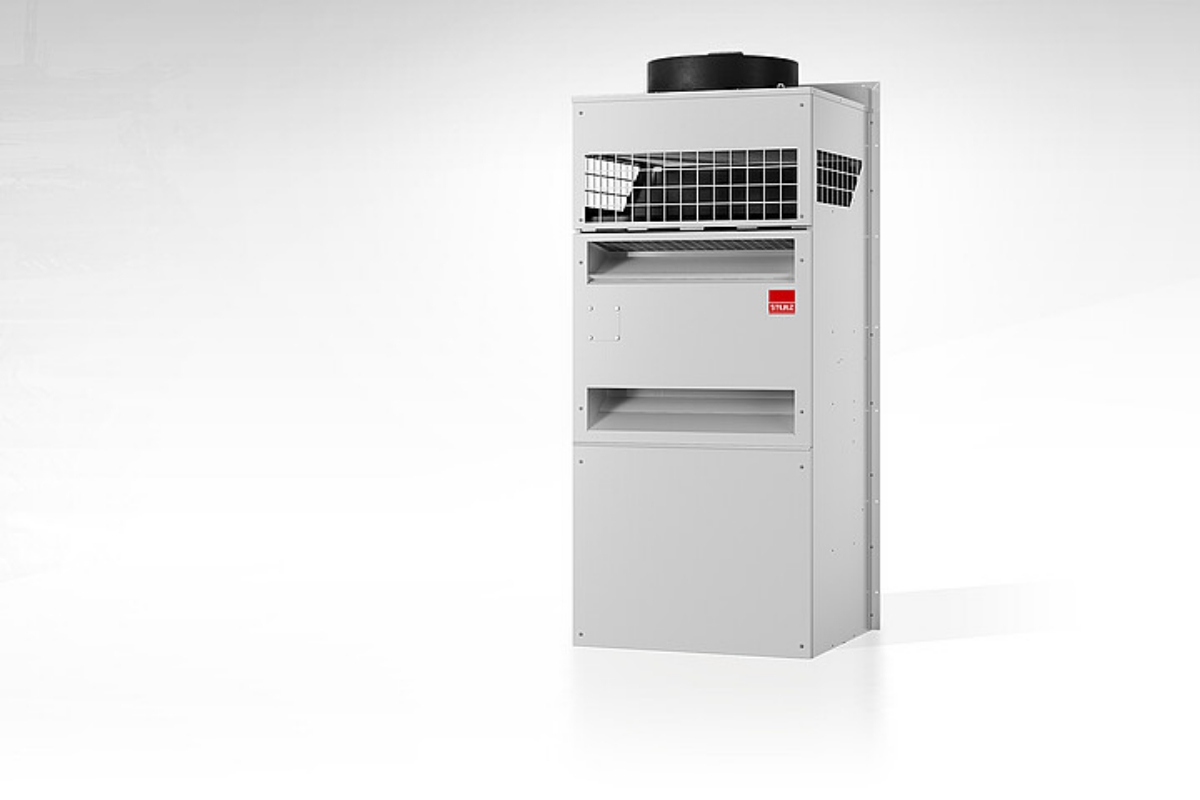
STULZ, a manufacturer of mission-critical air conditioning technology, has introduced the fourth generation of its TelAir and WallAir cooling series for edge, 5G, and critical infrastructure applications. The TelAir 4 and WallAir 4 units use R454C refrigerant, integrated free cooling, and an EN 378-compliant safety architecture. They are designed for edge data centres, telecommunications containers, shelters, and radio stations. The units are available with two installation concepts: TelAir 4 is designed for indoor installation, whilst WallAir 4 can be mounted externally on a container wall. Anika Do, Global Product Manager at STULZ, explains that, "Both are available in two standard enclosure sizes and four cooling capacity classes, ranging from 6–17kW." The units are designed to address increasing thermal densities and the requirements of the amended European F-Gas Regulation (EU) 2024/573. Free cooling cuts energy use STULZ says the units can reduce operating costs by up to 80% when using combined free cooling and mixed-mode operation. The electronically commutated (EC) fans also comply with the requirements of the upcoming ErP 2027 Ecodesign Directive. Both models operate from -20°C to +54°C, while an optional winter kit can extend operation down to -40°C. Customers can choose between on/off systems with a thermostatic expansion valve, or continuously modulating EC inverter compressors paired with an electronic expansion valve. Both configurations have hermetically sealed refrigeration circuits. The units also feature a multi-stage safety architecture designed for A2L refrigerants such as R454C. In the event of a refrigerant leak, the evaporator fan can increase to maximum speed to dilute and extract refrigerant gases. A two-stage sensor system activates maximum fan speed and shuts down other power consumers at 10% of the lower flammability limit (LFL). At 20% LFL, the unit is fully disconnected from the power supply. Meanwhile, an enclosed IP54 control cabinet is designed to eliminate potential ignition sources. TelAir 4 supports downflow and displacement airflow concepts, with optional adjustable outlet grilles for horizontal or vertical air distribution. WallAir 4 uses displacement cooling to provide direct cold air stratification within the room. Additionally, TelAir 4 specifically can be installed within a wall, providing protection against weather and vandalism, whilst also reducing noise emissions for use in residential and mixed-use areas. Both units use the E² BASIC controller, which includes an ethernet interface, Modbus, and multiple inputs and outputs for integration with building management and data centre infrastructure management (DCIM) systems. Password-protected access levels are included, alongside inputs for monitoring fire, smoke, and intrusion alarms. Anika continues, "For the fourth generation of the TelAir and WallAir cooling series, we set out to create two distinct cooling solutions that deliver outstanding flexibility across a wide range of edge, 5G, and critical infrastructure applications. "By combining cutting edge technology with modern design, ease of use, energy efficiency and reliability, we have achieved that goal. The new units are available to order immediately, with STULZ account managers able to provide further information and tailored advice." For more from STULZ, click here.

Nscale, Figure partner to power physical AI
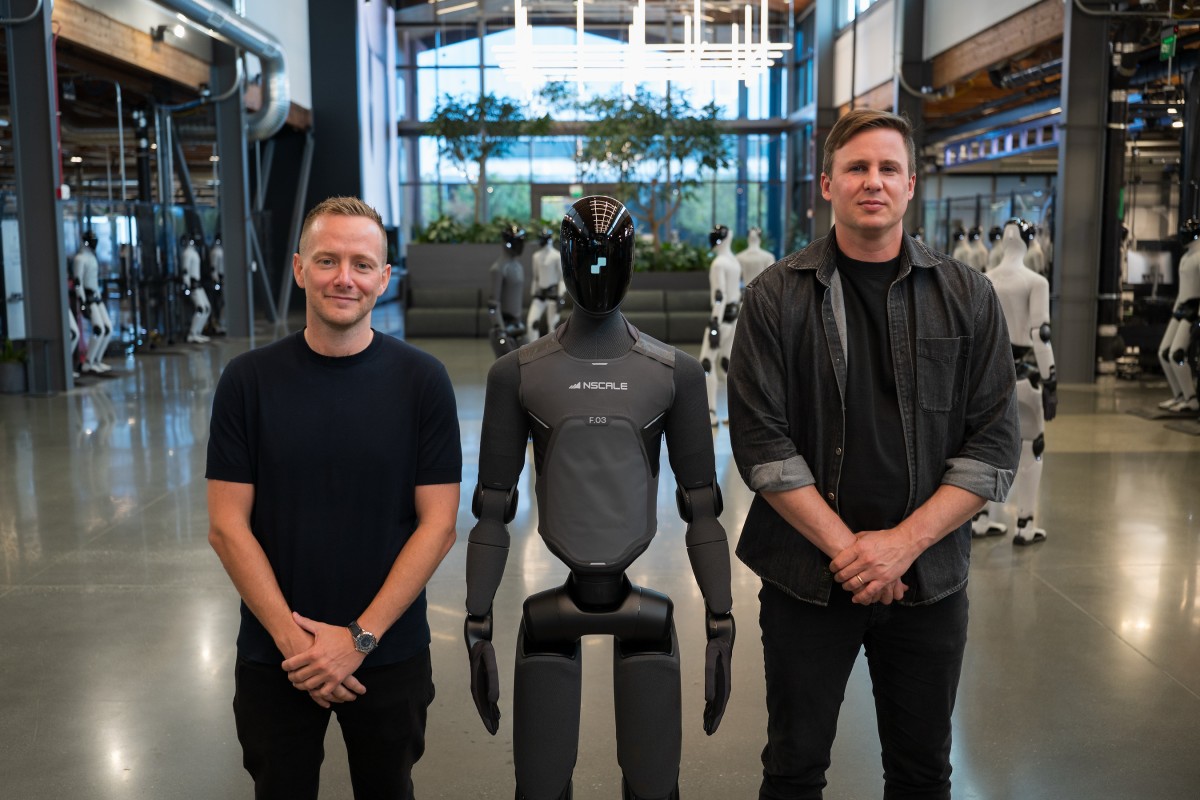
Nscale, a UK developer of AI data centres and cloud infrastructure, has signed a multi-year strategic partnership with humanoid robotics company Figure, including plans to deploy up to 100,000 NVIDIA GPUs to support the development of physical AI. The initial GPUs are targeted for deployment from the second half of 2027 at Nscale’s site in Barstow, Texas, USA. The agreement includes an initial commitment of $3.5 billion (£2.5 billion) in compute, with an intention to scale the partnership beyond $6 billion (£4.4 billion). Nscale will also become a Figure shareholder and its preferred compute provider, supporting the training and deployment of Figure’s Helix AI models for humanoid robotics. Compute supports humanoid robotics The partnership will use NVIDIA’s Vera Rubin platform and Nscale’s AI cloud infrastructure to provide compute for Figure’s models. The companies will also explore scaling Nscale’s supply chain using humanoid robots. Jensen Huang, founder and CEO of NVIDIA, has stated that the partnership will connect model training, simulation, and deployment in Figure’s robots. He comments, “Humanoid robots extend physical AI into the world designed for people, opening a major new industry. Nscale and Figure have activated the robotics flywheel: training Figure's models on NVIDIA Vera Rubin through Nscale's AI cloud, validating them in NVIDIA Isaac Sim, and deploying them on NVIDIA GPUs in Figure's robots.” Brett Adcock, founder and CEO of Figure, adds, “To bring humanoid robots to every home in the world, we are largely constrained by data and compute. Our AI model, Helix, becomes more capable the same way every learned system does: with more data and compute. "Today, we're excited to partner with Nscale to bring the compute required to make this vision a reality.” For more from Nscale, click here.

Telxius boosts Caribbean connectivity with Cancun facility
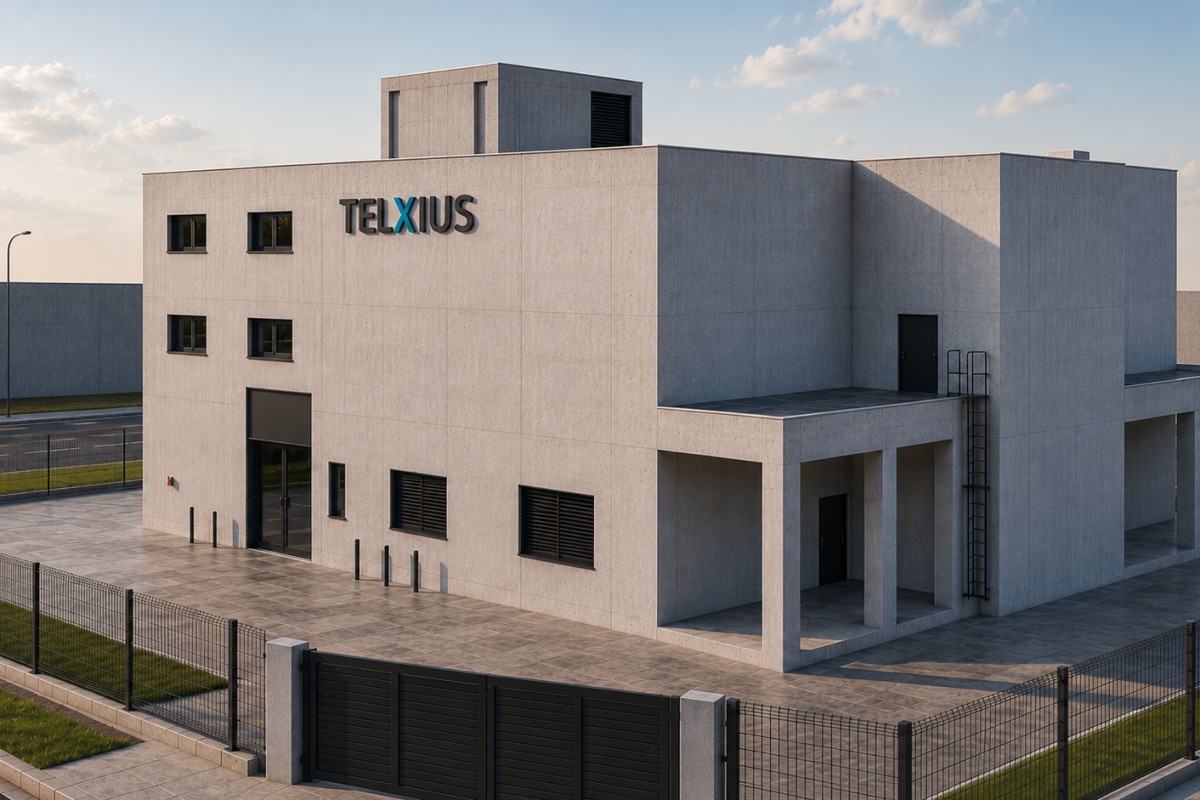
Telxius, a Spanish operator of submarine cable networks and telecommunications infrastructure, has opened a carrier-neutral landing gateway and edge data centre in Cancun, Mexico, strengthening connectivity between the Caribbean, USA, Latin America, and Europe. The facility serves as a landing point for Tikal, a submarine cable connecting Puerto Barrios in Guatemala with Boca Raton in the US. Due to launch in the first half of 2027, Tikal is expected to provide an initial capacity of 380Tbps on its main trunk. Integrated into Telxius’s global network, the Cancun facility combines subsea connectivity, terrestrial networks, and edge computing. It is designed to support data-intensive and latency-sensitive workloads, including cloud, content, AI, and CDN deployments. Edge facility adds network resilience The Tier III facility incorporates N+1 and 2N redundancy across critical power and cooling systems, alongside physical and network security measures. Its carrier-neutral design allows customers to interconnect with multiple networks, cloud providers, and digital platforms. The facility also provides an alternative route to Santiago de Querétaro, expanding Telxius’s network presence in Mexico and adding route diversity for customers. Mónica Martínez, CMO at Telxius, says, “We’re excited to expand our network footprint in Mexico with our new facility in Cancun. It truly reflects the convergence of subsea connectivity, terrestrial networks, and edge infrastructure to create a unique digital hub for the Caribbean and the Americas. “By bringing connectivity and computing resources closer to where demand is growing, we enable lower latency, greater resilience, and faster access to cloud, content, and AI-driven services for customers across the region.” The Cancun development follows Telxius’s recent network expansion in Santo Domingo in the Dominican Republic and adds to its existing infrastructure in the Caribbean and Mexico. For more from Telxius, click here.

FlexSysAI launches platform to manage DC energy demand
Australian energy technology company FlexSysAI has launched a platform designed to make data centre power demand more flexible by shifting GPU-based AI workloads between locations and times without affecting service. The platform connects electricity market and grid conditions with AI workload balancing, allowing compute to be shifted to locations where electricity is cheaper and more abundant. Non-critical workloads can also be reduced when the grid is under strain and electricity prices are high. FlexSysAI says the approach could help data centre operators connect to the grid sooner, reduce electricity costs, access renewable power when it is available, and receive payments for supporting grid operations. The company was founded by energy specialists, technologists, and entrepreneurs including Victor Feoktistov (pictured above), Angelo Perera, and Sean Senvirtne. The team has developed its demand response technology over several years and secured a retail licence providing customers with direct access to energy markets. Australia provides test market for flexible computing FlexSysAI is initially targeting Australia, where the electricity grid, growing data centre demand, and high penetration of renewable generation provide a testing environment for the platform. The company says it is exploring adoption with multiple data centres in Australia. It is backed by EnergyLab and Sean Senvirtne, and is part of NVIDIA’s Inception programme. The launch comes as governments consider approaches to managing increasing data centre electricity demand. The Australian Energy Market Commission recently recommended a national framework that includes operational flexibility as one potential approach to managing demand. FlexSysAI co-founder Victor Feoktistov says, “Data centres need a strategy for the power crunch that is holding back the sector. Physical grid constraints are beginning to bite and time to power is already a major constraint for operators. "These pressures are likely to worsen over the next two to three years, while regulatory pressure is moving even faster as more jurisdictions look to require flexibility from large energy users. “Operators stay in control, see a live price for flexibility, and choose when to shift workloads while connecting to the grid sooner and getting ahead of mandatory requirements that continue to emerge across key markets.” Angelo Perera, Chief Technology Officer at FlexSysAI, adds, “We are starting in Australia’s National Electricity Market as it has one of the world’s most challenging grids, and its structure and volatility strongly reward smarter, more flexible demand. "This makes Australia an ideal market to prove the technology before deploying it globally as we provide a long-term solution to the accelerating electricity demand problem.” FlexSysAI has formally stated it intends to expand into international markets as data centre electricity demand increases.


Translate »