Investment & Business


Ecolab establishes data centre liquid cooling partnership
Ecolab, a US provider of liquid cooling systems for data centres, has established a technology partnership ecosystem to accelerate the development of AI data centre infrastructure, bringing together Siemens, Alfa Laval, and Dassault Systèmes to address power distribution, liquid cooling, and infrastructure design. Announced at SC26, the initiative aims to help data centre operators move from design to production more quickly whilst improving performance, uptime, and energy efficiency, as well as reducing water consumption. The partnerships cover different stages of the data centre lifecycle, with each company contributing specialist technology and expertise. The collaborations also feed into Ecolab's direct liquid cooling thermal management system. Christophe Beck, Chairman, President, and CEO of Ecolab, comments, “AI is advancing at an extraordinary pace, and the infrastructure behind it needs to advance just as fast. That’s why we’re bringing the best in the industry together to move faster from design to first token. Together, we’re building the next generation of AI infrastructure.” Partnerships address power, cooling, and design Siemens is working with Ecolab on integrated power distribution and cooling infrastructure for high-density AI workloads. The collaboration combines Ecolab's liquid cooling and coolant distribution unit (CDU) technology with Siemens's power distribution, automation, software, and digital twin capabilities. Peter Koerte, President of Siemens Smart Infrastructure and Member of the Managing Board, says, “The thermal and energy demands of AI workloads have made piecemeal data centre architectures obsolete. Together with Ecolab, we are tackling the industry's biggest bottleneck: building high-performance AI infrastructure fast, efficiently, and sustainably.” Alfa Laval has been selected to contribute heat exchanger and flow components expertise to Ecolab's next-generation CDU development initiative. Its contribution includes heat exchangers, pumps, and valves, complementing Ecolab's experience in thermal loop management, water treatment, and direct-to-chip liquid cooling. Tom Erixon, President and CEO of Alfa Laval, notes, “Our collaboration with Ecolab drives solutions for sustainability, energy efficiency, and heat reuse to ensure performance and uptime throughout the lifecycles of data centres.” Dassault Systèmes, meanwhile, is collaborating with Ecolab on a virtual twin model that links technology cooling system (TCS) and facility water system (FWS) models to simulate AI data centre performance. The model considers factors including rack design, CDUs, coolant selection, water consumption, and power efficiency. It is intended to help operators assess cooling configurations, redundancy requirements, and facility water temperatures before deployment. Elisa Prisner, Executive Vice President, Strategy, Industry, Marketing & Transformation at Dassault Systèmes, says, “Virtual twins let the industry connect chemistry, thermal engineering, and water management in a single model so that these AI factories can be designed to be more efficient from the start.” For more from Ecolab, click here.

Armada begins European AI infrastructure production in Dublin
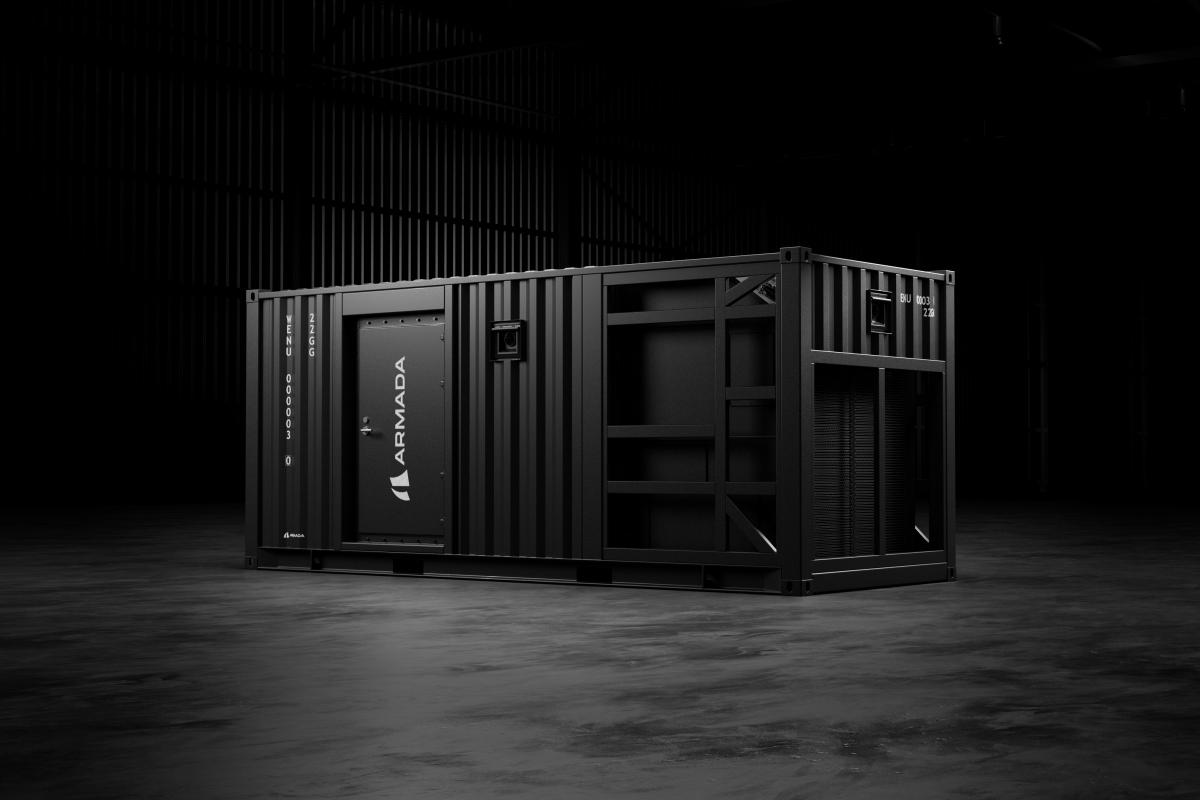
Armada, a US provider of modular edge data centres and connectivity for remote sites, and Johnson Controls, a global provider of smart building technologies, have begun production at Galleon Forge Two, a manufacturing facility in Dublin, Ireland, producing modular data centre infrastructure for sovereign AI deployments. The facility is Armada's first European manufacturing operation and the second Galleon Forge established at a Johnson Controls site, following Galleon Forge One in Gilbert, Arizona, USA. The companies marked the start of production with the completion of the first Dublin-built Leviathan, a modular data centre with multi-megawatt capacity destined for Fossefall in Norway. The unit was engineered, integrated, and tested at the Dublin facility. Leviathan combines Armada's computing infrastructure and software with Johnson Controls' thermal management technology and manufacturing capabilities. Its thermal systems include coolant distribution units, chillers, and building controls, alongside cooling technologies designed to reduce water consumption, energy use, and noise. Manufacturing capacity expands across Europe Galleon Forge Two occupies 90,000ft² (8,361m²) at Johnson Controls' Dublin manufacturing site and is supported by approximately 700 engineers, technicians, and other skilled workers. The operation is also expected to involve additional roles across the European supply chain. The first Galleon Forge, located in Gilbert, Arizona, is expected to begin continuous production in early 2027. The facility will cover up to 400,000ft² (37,161m²) and support more than 500 jobs, with further employment across the domestic supply chain. Armada also plans to expand manufacturing at a Johnson Controls site in Edmonton, Canada. The manufacturing model is intended to allow countries and regions to produce sovereign AI infrastructure domestically, using local workforces and supply chains. “The speed of the sovereign AI revolution requires a new approach to meet demand,” says Dan Wright, co-founder and CEO of Armada. “The Galleon Forge model keeps producing and it’s designed to keep expanding. We can now deliver to any nation or organisation that needs advanced computing infrastructure manufactured within its own borders, owned and controlled on its own terms.” Austin Domenici, President of Global Data Centre Solutions at Johnson Controls, adds, “We’ve been building modular infrastructure for nearly two decades. What’s different today is the scale, density, and speed AI demands. "With Armada, we’re combining that experience with our thermal expertise and manufacturing scale to complete more of the complex integration work in the factory and bring compute online faster and more predictably.” Leviathan operates using the Armada Platform, which manages power, cooling, and computing across individual units and supports open-source and proprietary AI models. Customers own the infrastructure and retain control of its operation without relying on an external cloud provider. Through the Armada Sovereign SI Grid, multiple Leviathan units can operate as a fleet. Initial deployments in Norway and Australia Norwegian company Fossefall has ordered five Leviathan modular data centres, with combined capacity exceeding 9MW. Deliveries are scheduled to be completed by the first quarter of 2027, beginning with the unit produced in Dublin. Øyvind Vesterdal, CEO of Fossefall, comments, “Europe needs more advanced computing infrastructure, and the focus now needs to be on getting projects built. “Working with Armada and Johnson Controls gives us a more standardised and modular approach to deployment. This can help shorten timelines and make projects easier to develop in close cooperation with local communities. With access to clean energy, political stability, and a suitable climate, the Nordics are well positioned for large-scale AI infrastructure.” In Australia, WinDC plans to deploy 11MW of modular data centre capacity across renewable energy sites, locating computing infrastructure close to wind, solar, and battery generation. “Australia's energy transition depends on building AI infrastructure in the right place, where the renewable energy is, rather than waiting for a grid that can't scale fast enough to carry it,” notes Andrew Sjoquist, founder and CEO of WinDC. “Leviathan lets us bring compute directly to clean power and scale it with the workload.” For more from Armada, click here.

SolidUltra secures €3m to develop 800VDC power technology
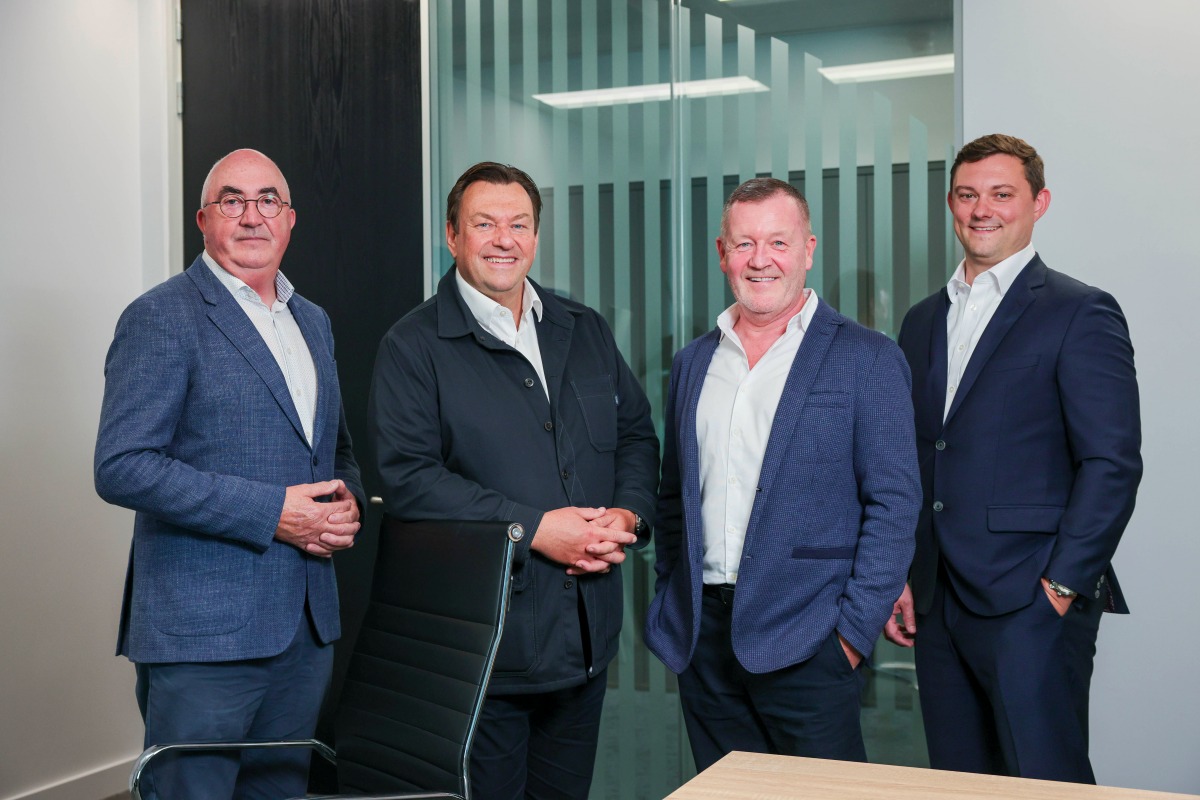
SolidUltra, a new European developer of modular solid-state transformers (SSTs) for AI data centres, has secured €3 million (£2.5 million) in funding from founding partner Watt & Well, a French power electronics group. The funding was secured within three months of SolidUltra’s incorporation in June and will reportedly support technology development and industrialisation. The company is developing a medium-voltage SST designed to connect the electricity grid directly to 800VDC distribution systems in a single conversion stage. The technology targets the power requirements of next-generation AI data centres, where GPU racks are moving towards megawatt-scale consumption. Developing power conversion for AI infrastructure SolidUltra says conventional data centre power architectures rely on a low-frequency transformer followed by several conversion stages. As GPU power density increases, this can add to energy losses, cooling requirements, equipment footprint, and deployment times. Its SST is targeting 98.5% efficiency, with the company claiming it could reduce power losses by a factor of three and equipment footprint by a factor of four compared with conventional architectures. It also aims to reduce the carbon footprint of power-conversion infrastructure by up to 10 times and total cost of ownership by around 30%. The modular design is intended to scale from hundreds of kilowatts to 10MW and beyond. Field-replaceable power modules, which the company says can be swapped in under 15 minutes, are designed to support 99.999% availability. The development roadmap is aligned with the industry's move towards 800VDC architectures, including NVIDIA’s plans for future AI data centres. SolidUltra is targeting a commercial launch in 2028, with the funding supporting engineering, industrialisation, and initial customer engagement. Raul Iglesias (pictured above, right), CEO of SolidUltra, comments, “AI is not only changing computing; it is fundamentally changing the electrical infrastructure required to power it. With rack power moving towards the megawatt scale, the industry needs to rethink the way electricity is converted and distributed inside data centres. "We created SolidUltra to address that transition with a solution designed from the outset for the 800VDC era, backed by Watt & Well’s industrial base. Securing €3 million only three months after our creation gives us the means to move rapidly towards industrial deployment.” Production targets for 2032 SolidUltra aims to deliver 10,000 modular SST systems by 2032, representing approximately 1GW of installed power. Its founding partner, Watt & Well, brings existing power electronics manufacturing capabilities to the development programme. Romain Beaume (pictured above, left), CBO at SolidUltra, says, “Today, data centre operators can wait years to get power to new AI capacity; we want to deliver it in weeks, with lower losses and a footprint four times smaller. Our ambition is to build a European industrial player capable of serving the market on a global scale.”

Pure DC secures $1.9bn financing framework for expansion
Pure Data Centres Group (Pure DC), a designer, developer, and operator of hyperscale data centres, has secured a $780 million (£579 million) platform growth facility, with a $1.1 billion (£815.8 million) accordion option that could increase the financing framework to approximately $1.9 billion (£1.4 billion). The facility adds three new lenders as the company expands its data centre platform across Europe and the Middle East. Citigroup Global Markets, First Abu Dhabi Bank (FAB), and Infranity join existing lenders ABN AMRO, Allianz Global Investors, and SMBC. Backed by Oaktree, Pure DC is developing a platform based on securing power for large-scale AI training campuses, interconnected with smaller inference-focused data centres. Its strategy combines securing power with site development, engineering, construction, and operations. Financing supports further campus development The facility will fund Pure DC’s development pipeline and acquisition of future sites across Europe and the Middle East. It follows $2.7 billion (£2 billion) in financing announced in May, including a $2.15 billion (£1.6 billion) facility secured against its Dublin and Amsterdam campuses and an increase in corporate-level financing to $550 million (£408 million). In July, Pure DC secured a further €1.3 billion (£1 billion) in committed senior debt for the first phase of its Seinäjoki AI campus in Finland. The company says financing secured over the past 12 months now totals more than $6.2 billion (£4.6 billion). Gary Wojtaszek, Executive Chairman and interim CEO at Pure DC, says, “Attracting new lenders and broadening our funding base is a strong endorsement of Pure’s differentiated strategy. "We are building a pan-European and Middle East cloud and AI infrastructure business rooted in secured power sites and backed by teams that know how to deliver. That combination gives our customers and lenders confidence in our ability to turn our pipeline into operating capacity.” Mike Schwartz, CFO at Pure DC, adds that the facility strengthens the company’s corporate funding base, complements financing arranged for individual campuses, and provides a framework for raising further capital as its pipeline advances. Dublin microgrid wins project awards Pure DC also highlighted its 2026 sustainability and project delivery awards. Its Dublin campus microgrid won Digital Infrastructure Project of the Year at the Building Innovation Awards, whilst its AUH01 campus was named a national winner in the Industrial Project of the Year category at the MEED Projects Awards. The company also received sustainability awards recognising work on lower-carbon energy, water use, embodied carbon, and carbon removal through its subsidiary, A Healthier Earth. For more from Pure DC, click here.

DTGen acquires Realpower to expand critical power services
DTGen, a UK supplier of standby diesel generators and energy systems, has acquired Irish generator maintenance specialist Realpower, expanding its engineering capacity across the UK and Ireland and creating at least 10 new jobs. The acquisition by DCC Energy Ireland brings together DTGen’s 22 years of experience in standby power generation and project delivery with Realpower’s 16 years of generator maintenance expertise. The combined business has more than 110 employees, including 70 engineers, operating from DTGen’s locations in Glasgow, Bristol, and Northampton, alongside Realpower’s base in Moydrum, County Westmeath. The value of the acquisition has not been disclosed. The expanded business will provide services covering system design, installation, commissioning, maintenance, remote monitoring, and lifecycle support. DTGen expects the acquisition to increase its engineering capacity, geographical coverage, and emergency power support across both markets. DTGen has delivered projects across retail, financial services, healthcare, the public sector, and major infrastructure, including more than 50 data centre projects worldwide. The company will also draw on its European trading platform to support customers and projects across the continent. Its capabilities include those of PCS, a power controls specialist acquired around 18 months ago, which designs, builds, tests, and commissions power management systems. Realpower provides planned preventative maintenance, inspections, servicing, and emergency repairs for critical power infrastructure across Ireland. Expanded services for data centres and critical infrastructure Nigel Newton, Managing Director at DTGen, says, “Realpower has established itself as one of Ireland’s most respected maintenance providers, with service capabilities that complement DTGen’s generator project delivery expertise, making it an excellent addition to the DCC Energy Ireland and DTGen group. "With Farrell Spollen recently announced as Managing Director of Ireland, he will play a key role within the DTGen team in driving our growth ambitions and strengthening our presence in the Irish market. “For engineers and consultants working in high-demand environments, including data centres, the combined business offers practical engineering expertise, local service support, and the scale to help customers investing in generator systems choose a delivery partner with confidence.” Realpower’s customers will continue to receive support from its existing team, with access to the wider resources of the combined business under the leadership of the company's newly appointed Irish Managing Director, Farrell Spollen. Michael Tumulty, owner of Realpower, comments, “Joining forces with DTGen and being backed by DCC Energy Ireland is a positive step for Realpower. Our commitment to providing specialist support to organisations across Ireland will not change, and our customers will receive the same trusted service and expertise from our team. “Now strengthened by DTGen’s project experience, wider engineering capability, and the scale of DCC Energy Ireland, it creates an opportunity to continue supporting customers’ critical power needs and to grow the services we can offer in the years ahead.” Rob Flanagan, Commercial Director at DCC Energy Ireland, adds, “The acquisition of Realpower reflects DCC Energy Ireland’s continued investment in specialist energy businesses that support customers with critical infrastructure and resilience. “Alongside our fuels, power, and solar capabilities, our focus is on supporting businesses that deliver long-term value to customers, while ensuring they have the investment, backing, and expertise to develop further. This acquisition strengthens our ability to support customers across Ireland with dependable, future-focused energy solutions.” For more from DTGen, click here.

AirTrunk secures A$4.25bn green loan for SYD3
Australian data centre operator AirTrunk has secured A$4.25 billion (£2.2 billion) in green financing to expand its SYD3 data centre campus in Western Sydney, with completion expected by mid-2028. The financing will fund the continued development of SYD3, adding infrastructure for cloud computing, artificial intelligence, and other digital services used by Australian businesses, government, and communities. AirTrunk expects the project to support more than 10,000 jobs across construction, engineering, logistics, trades, and safety. The green loan includes margin adjustments, with contributions from any resulting savings directed towards local charities working in STEM education, digital equity, biodiversity, conservation, sustainable innovation, and disaster relief. AirTrunk says SYD3 is generating opportunities for contractors and suppliers across Western Sydney and Australia, including in manufacturing, freight, civil engineering, and electrical and mechanical services. In FY26, the company worked with 615 Australian suppliers, accounting for A$3.4 billion (£1.8 billion) in supplier activity. Expansion brings jobs and supply chain investment To support construction, AirTrunk is using a 25,000m² buffer zone in Western Sydney to store, stage, and pre-commission equipment before delivery to the campus. The company has also invested in dedicated charter vessels to transport equipment through Port Botany, Port Kembla, and other locations. Tom Mackellar, Vice President of Origination and Market Expansion at AirTrunk, explains, “SYD3 is a long-term investment in Western Sydney and Australia’s digital capability, backed by the confidence of leading Australian and international banks. "As the campus develops, it’s building a regional ecosystem through active hiring, sustained project activity, and strategic supply chain partnerships, creating opportunities for local workers, contractors, and businesses while delivering infrastructure Australians increasingly rely on. "The green financing also reflects our view that sustainability should be built into how digital infrastructure is funded and delivered. We’re focused on responsible growth that creates lasting value for communities in the regions where we operate.” AirTrunk adds that it will continue working with local contractors, suppliers, and community partners, whilst supporting workforce development through apprenticeships, vocational education partnerships, and post-trade training. Australian capacity and emissions targets AirTrunk operates five Australian data centre campuses with more than 1.2GW of capacity. It has reportedly invested more than A$12 billion (£6.3 billion) in Australian projects and plans to invest a further A$75 billion (£39.5 billion) over the next decade. The latest financing brings the company's total committed debt financing globally to approximately A$38.4 billion (£20.2 billion), including more than A$19.8 billion (£10.4 billion) for Australian projects. The company’s emissions strategy includes a target to reach net zero Scope 1 and Scope 2 emissions by 2030, alongside reductions in Scope 3 emissions through measures such as lower embodied carbon in new builds. At SYD3, construction measures include lower-carbon steel and concrete, and a target to divert at least 90% of non-hazardous construction waste from landfill. Construction of the expanded campus, led by A W Edwards, is underway, with completion expected by mid-2028. The loan is backed by a consortium of 32 Australian and international financial institutions, with 14 banks having underwritten the facility, including BNP Paribas, Deutsche Bank, ING, Mizuho Bank, MUFG Bank, National Australia Bank, Royal Bank of Canada, and Société Générale. For more from AirTrunk, click here.

GF adds the Multi Control Valve to its liquid cooling portfolio
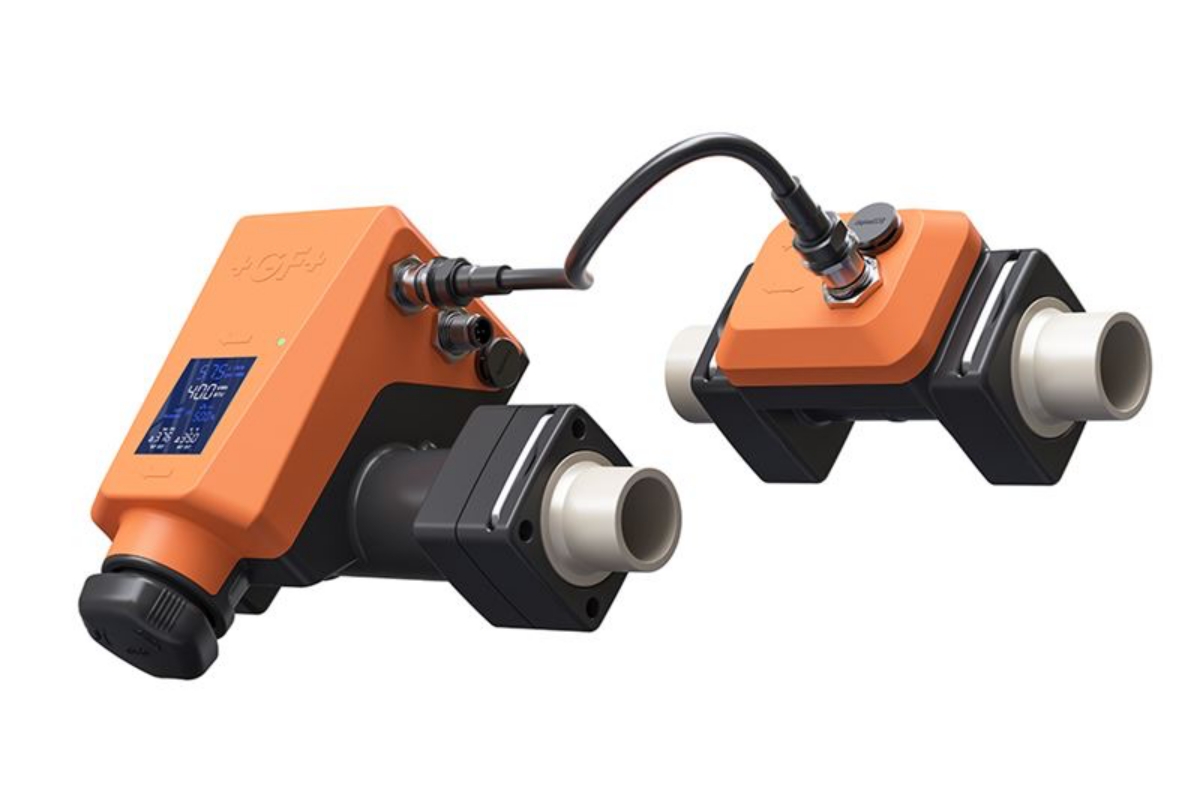
GF, a provider of piping systems for data centre cooling systems, has introduced a Multi Control Valve for direct liquid cooling, integrating flow control, sensing, and thermal energy metering. The product is designed to regulate coolant flow, monitor system conditions, and measure thermal energy distribution. The valve integrates multiple functions into a single polymer assembly and is designed for direct liquid cooling (DLC) systems. GF says the valve is up to 70% lighter and 50% more compact than conventional metal assemblies. It is intended for high-density direct-to-chip cooling systems, where rack power densities can exceed 100kW and changing AI and high-performance computing (HPC) workloads require adjustments to coolant flow. The Multi Control Valve combines a valve, an electronic actuator with a five-second fail-safe response, and five sensors measuring volumetric flow, pressure, and temperature. Ultrasonic flow measurement and ceramic pressure sensors enable real-time calculations of differential pressure, temperature variation, and thermal energy distribution. The valve body uses polyphenylene sulphide (PPS) and other engineered polymers. According to GF, the design reduces weight and avoids issues associated with internal scaling and fluid contamination in metal assemblies. It also features an IP68-rated housing, a single-cable layout, and communication interfaces including IO-Link, Modbus RTU, and BACnet MS/TP. Connection options include PP-H spigots and stainless steel tri-clamps. Integrated monitoring and flow control GF participates in the Open Compute Project (OCP) community as an OCP Solution Provider. The company says the valve's polymer fluid pathway is designed to help maintain coolant integrity, whilst its monitoring and dynamic flow balancing capabilities support consistent coolant distribution across racks. Charles Freda, Global Head of Data Centers at GF, comments, “With the launch of the Multi Control Valve, we are providing the means to connect individual rack precision to macro-level infrastructure efficiency. “By enabling rapid, intelligent flow circuit modulation to instantly match thermal and hydronic load conditions, we empower data centre operators to slash parasitic mechanical losses, maintain perfect chip-level thermal stability, and actively optimise their operational efficiency.” The valve completes GF's LiquidCore portfolio, which includes chiller-to-chip fluid distribution, off-site prefabrication, PROGEF PP-H piping, polymer valves and automation equipment, custom SYGEF PVDF in-rack manifolds, and the Quick Connect Valve 700 for rack integration. For more from GF, click here.

ABB, ETM develop direct-drive motors for data centre cooling
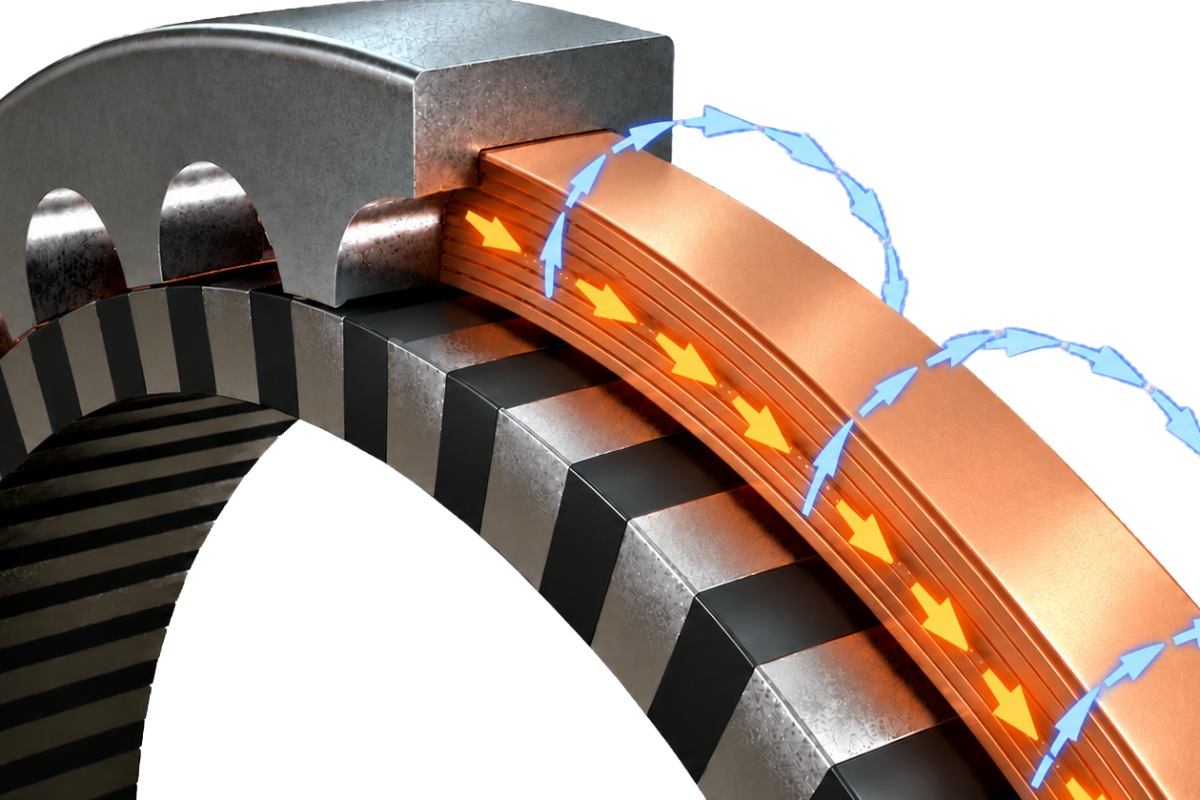
ABB, a multinational corporation specialising in industrial automation and electrification products, has expanded its partnership with Electric Torque Machines (ETM), a subsidiary of Graco, to develop and commercialise motors using ETM’s patented Transverse Flux Motor (TFM) technology for data centre cooling. TFM technology generates high torque at low speeds, making it suitable for large cooling fans, pumps, and heat rejection towers used in high-density data centres. The motors use a direct-drive architecture intended to reduce mechanical complexity, energy losses, noise, and maintenance requirements, whilst lowering lifetime ownership costs. Combined with ABB’s variable speed drives and motor portfolio, the technology is intended to provide additional options for cooling infrastructure. Meeting growing cooling demands Justin McMahon, EVP, Global Business Line, NEMA Motors Division at ABB, says, “As AI reshapes data centre design, operators are looking for cooling solutions that deliver more with less: less energy, less complexity, and less downtime. Our expanded partnership with ETM brings a differentiated motor technology that addresses exactly these needs.” Mark Sheahan, Chief Executive Officer of Graco, adds, “Our partnership with ABB is the right path to bringing Transverse Flux Motor to the data centre market at scale. ABB’s global reach and deep expertise in electrification make it an ideal partner to commercialise this technology in applications where reliability and efficiency matter most.” The partnership comes as data centre electricity demand increases alongside AI infrastructure expansion. The release cites global data centre electricity demand growth of 17% in 2025, with AI-focused facilities growing by 50%. The TFM technology will complement ABB’s existing portfolio of high-efficiency motors, ultra-low harmonic variable speed drives, and liquid cooling experience, as operators seek cooling systems designed for continuous operation and higher heat loads. The motors will be marketed under the ABB brand. For more from ABB, click here.

Schneider Electric unveils modular AI data centre design
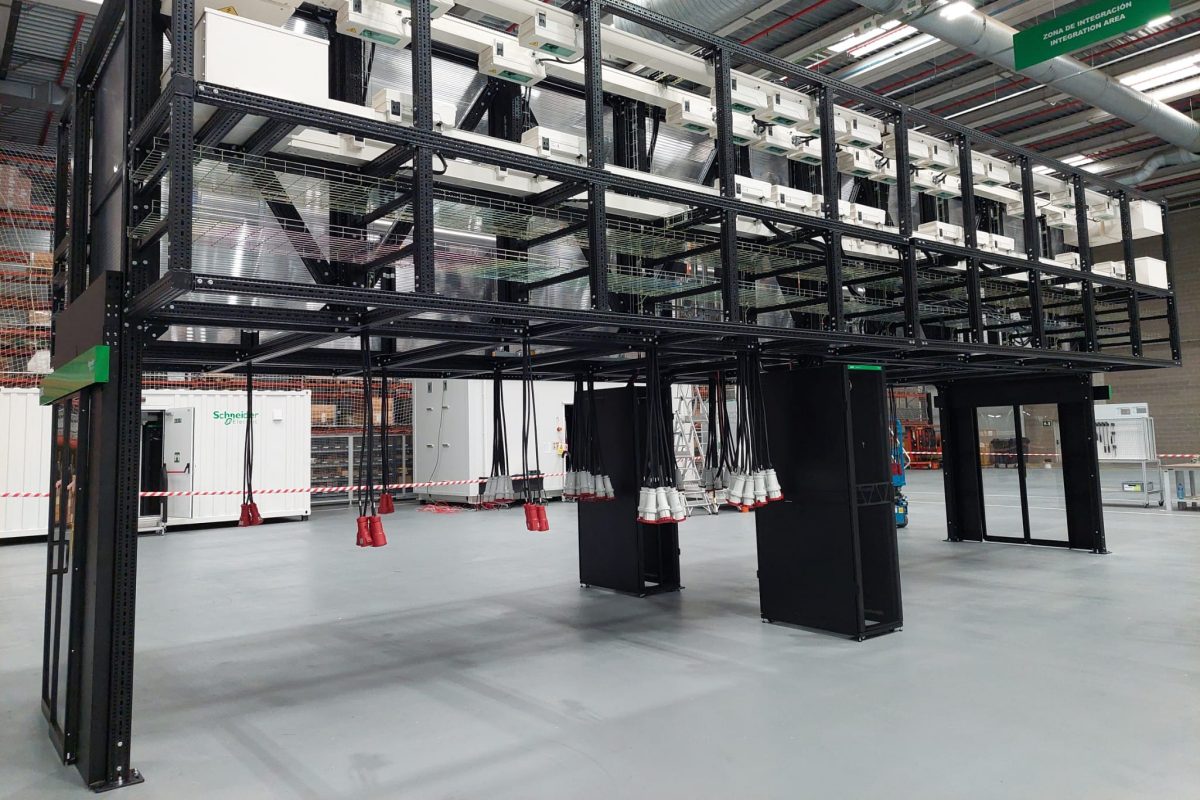
Global energy technology company Schneider Electric has introduced its RapidScale Modular Data Centre Reference Design 115, a pre-engineered blueprint for high-density AI infrastructure based on the NVIDIA Vera Rubin platform. The reference design combines power, liquid cooling, IT, software, and lifecycle services to support the repeatable deployment of AI data centres. It uses liquid cooling and temperature controls to manage heat and power consumption in high-density computing environments and is also intended to simplify site logistics and reduce the need for bespoke engineering. Prefabrication cuts installation time Research co-authored by Schneider Electric and hyperscale developer Compass Datacenters, Prefabricated White Space Module Time Study: Lessons from a High-Density Liquid-Cooled Deployment (White Paper 238), reports that prefabricated modular IT pods reduced on-site installation time from 75.5 hours to 15 hours per pod, an 80% reduction. Adil Attlassy, Chief Technology Officer of Compass Datacenters, explains, “The white space brings together the greatest concentration of systems and trades in the smallest footprint, with each installation dependent on the one before it. "Working jointly with Schneider Electric, we engineered a prefabricated module that integrates these systems into a single assembly, eliminating the need to coordinate multiple scopes of work on site. "By reducing on-site installation time by 80%, we accelerate deployment and help our customers bring their workloads online sooner.” Standardised infrastructure for AI factories The RapidScale approach combines pre-engineered designs with a supply chain spanning eight primary manufacturing sites, covering 1.35 million ft² (125,000m²), alongside three additional facilities and 12 partner sites across 10 countries. Schneider Electric says its manufacturing capacity has grown fourfold since 2025 and that around 90% of the equipment incorporated into RapidScale is manufactured in house. The reference design is intended as an initial step towards supporting the NVIDIA DSX POD reference design, which enables factory integration and validation of AI infrastructure before shipment. It has been validated to ANSI standards for US deployments, with plans to extend the framework to IEC standards for international use. Manish Kumar, Executive Vice President, Secure Power and Data Centres at Schneider Electric, notes, “As AI infrastructure scales at unprecedented speed, customers need solutions that are standardised, reliable, and deployable with certainty. "Through our portfolio of reference designs and prefabricated solutions, combined with global supply chain strength and lifecycle expertise, we help AI factory operators accelerate time to value while building the resilient infrastructure required for next-generation compute.” For more from Schneider Electric, click here.

Armada, Johnson Controls plan 500MW AI infrastructure rollout
Armada, a US provider of modular edge data centres and connectivity for remote sites, plans to work with Johnson Controls, a global provider of smart building technologies, to build 500MW of distributed sovereign super intelligence (SI) infrastructure in 2027, using factory-integrated systems based on NVIDIA’s DSX POD reference design and Vera Rubin platform. Announced at NVIDIA GTC, the collaboration will combine engineering, manufacturing, and deployment to deliver modular infrastructure with cabling, wiring, piping, and functional validation completed before shipment. Factory-built infrastructure aims to accelerate deployment The NVIDIA DSX POD reference design moves repeatable construction work from data centre sites into factories. Compute, networking, rack-level power, plumbing for liquid cooling, and supporting infrastructure are integrated and validated before delivery. On site, the containers are connected to prepared power, water, cooling, and networking infrastructure, with capacity expanded by adding standardised units. Armada will use NVIDIA DSX Air to simulate AI factories and validate its Bridge GPU management software before shipment. Once deployed, NVIDIA DSX MaxLPS will help manage power and workloads to maximise computing throughput within each site’s available power capacity. Dan Wright, co-founder and CEO of Armada, says, “The SI race isn't going to be won by whoever pours concrete the fastest. Companies and nations can have the chips, the land, the power, and the ambition and still be told to wait years for a building. "The NVIDIA DSX POD reference design lets us cut that wait out of the equation. We build the SI factory in one of our Galleon Forge factories, ship it, connect it, and our customers are generating tokens in months on infrastructure they own and control.” Distributed capacity for sovereign AI Armada says conventional 50MW facilities can take years to become IT-ready and require around 600,000 on-site labour hours. It also cites a projected construction workforce shortfall of 288,000 workers by 2027 as a challenge to expanding capacity. The company plans to deploy modular SI facilities close to energy sources, including stranded, renewable, and off-peak power. Its proposed architecture is designed to operate without cloud dependencies, allowing customers to retain control of their models, data, and infrastructure. Charlie Boyle, Vice President of DGX Systems at NVIDIA, notes, “The demand for compute is outpacing the speed at which the world can build the facilities to house it. "By utilising the NVIDIA DSX POD reference design, Armada can deliver factory-built, Vera Rubin-based containers to customers. Together with Johnson Controls, Armada is positioned to bring Vera Rubin-based factories to customers who need capacity now, wherever their energy and data are.” Manufacturing partnership Armada brings experience deploying modular data centre infrastructure in remote and challenging environments, including Alaska, a US Navy littoral combat ship, and desert locations in the Middle East. The company says its manufacturing and deployment capabilities will support the planned rollout, with Johnson Controls contributing thermal management technology, engineering, and global manufacturing capacity. Joakim Weidemanis, CEO of Johnson Controls, comments, “NVIDIA is rapidly advancing the age of intelligence and reshaping the infrastructure required to support it. "Our collaboration with Armada combines their expertise in deploying compute at the edge with Johnson Controls' advanced thermal management technology, engineering capabilities, and global manufacturing scale. This combination delivers high-performance infrastructure engineered to quickly bring capacity online where and when it's needed.” Under the collaboration, NVIDIA will design, test, and validate the DSX POD reference design for the Vera Rubin platform, whilst Armada will engineer, manufacture, integrate, customise, service, and deliver the modular data centres.


Translate »