Looking beyond the grid
Author: Joe Peck
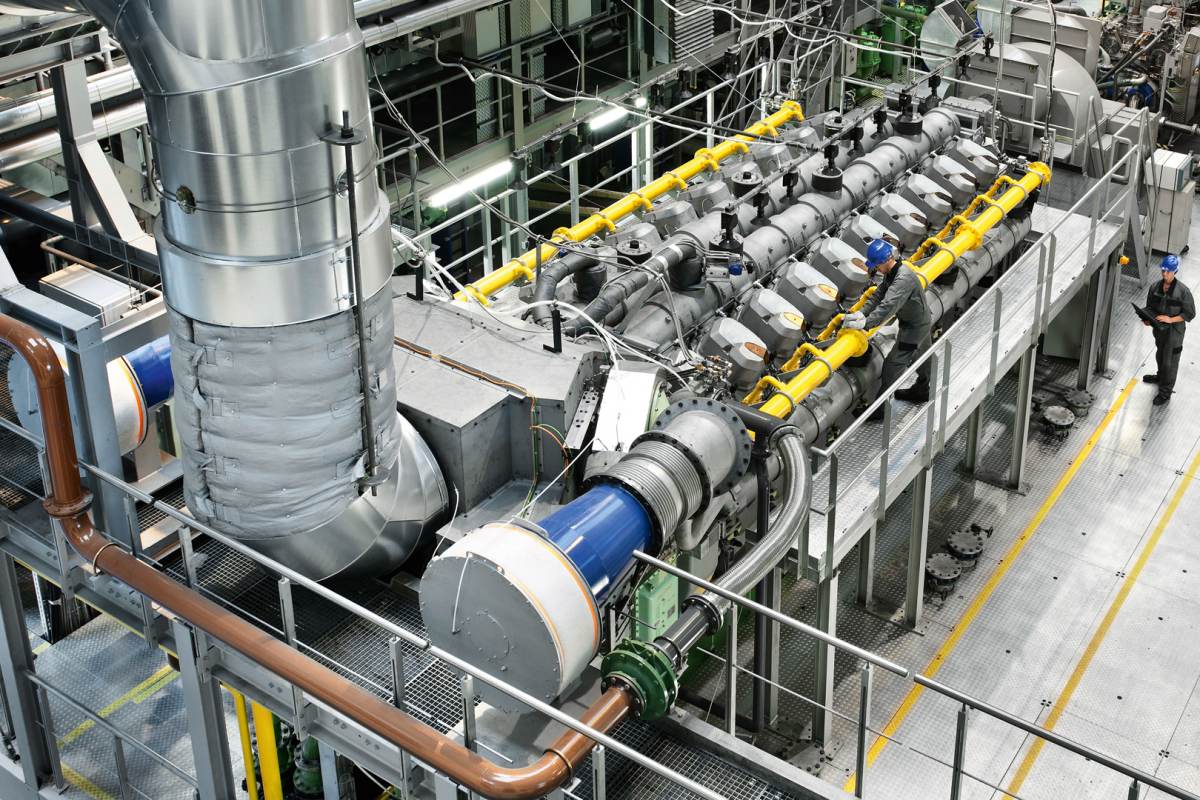
In this article, Everllence, a German maker of engines, turbines, and compressors, highlights how medium-speed engines, fuel flexibility, and scalable power generation can help data centre operators overcome grid constraints and meet AI-driven energy demands:
The rapid growth of AI and cloud applications is driving unprecedented demand for data centre capacity worldwide. At the same time, operators are facing a specific challenge that increasingly influences where and when new facilities can be built: access to reliable power.
AI is not only driving demand for digital infrastructure; it is also changing the scale of power required to support it. A single AI query can require around 10 times more energy than a conventional Google search, making energy availability an increasingly strategic consideration for data centre operators.
In many markets, grid connection lead times now stretch over several years. As a result, operators are exploring alternative power concepts that allow projects to move forward while still maintaining the reliability required for mission-critical infrastructure.
“The rapid growth of AI is fundamentally reshaping the way digital infrastructure is planned and developed. Access to reliable power is becoming a strategic factor that determines where new data centres can be built and how quickly they can be brought online,” says Alexander Stöckler, Head of Power 4-Stroke at Everllence.
When flexibility matters most
AI-focused data centres, in particular, place significantly higher demands on energy infrastructure than previous generations of facilities. Operators require a power supply that is available around the clock whilst enabling high power quality, even under dynamic load profiles.
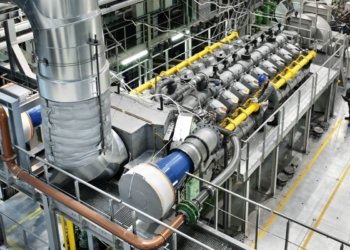
In a market traditionally dominated by gas turbines, medium-speed engines offer important advantages for data centre applications, particularly in terms of flexibility, scalability, and load response.
“Our medium-speed engines can reach full load from standby in under three minutes, allowing them to respond quickly to load changes,” Alexander notes. “In addition, they achieve excellent part-load performance, ensuring efficient operation, even under changing load profiles.”
Furthermore, the engines’ modular design adds another layer of flexibility. Individual generating units can be brought online or taken offline depending on demand, while plant capacity can be added incrementally as requirements grow. As a result, operators can expand their energy infrastructure in line with actual demand rather than making large, upfront investments in future capacity.
Beyond operational benefits, engine power plants can also help address one of the industry’s most pressing challenges: delayed grid connections. In this scenario, they can bridge the waiting period until grid access becomes available. Once a connection has been established, the same assets can continue operating, thanks to their strong dynamic performance. In many cases, they can support grid stability as a balancing plant without requiring hardware modifications, extending their value well beyond the initial bridging phase.
Between energy security and future-proof infrastructure
Alongside reliability and speed of deployment, operators are increasingly seeking long-term investment security. Fuel flexibility, therefore, is becoming an important consideration, allowing them to balance today’s energy needs with future decarbonisation ambitions.
Everllence’s portfolio of large-bore engines supports a gradual transition towards a lower-carbon energy infrastructure. Their dual-fuel technology allows them to run on both gaseous and liquid fuels, as well as to switch seamlessly between them whilst in operation. Notably, the company’s engines are already suitable for operation on climate-neutral fuels such as e-methane and biofuels. Selected gas engines are H₂-ready and support hydrogen shares of up to 25% in stationary applications.
Everllence is also one of the few suppliers to provide both main power and emergency power supply solutions for data centres. More recently, the company launched the 175D genset based on the in-house high-speed engine with the same name. It delivers 2.4MWe (3MVA) of standby power and is engineered for fast and stable load acceptance.
A trusted partner for energy projects
These advantages are already being put into practice in major data centre projects. For a facility delivering AI and cloud applications in the United States, Everllence is supplying 24 type 18V51/60G gas engines with a combined output of 480MW. The hyperscale data centre will operate completely off-grid.
Similarly, in Ireland, the company is nearing the completion of a project in the Dublin area where six 18V51/60DF dual-fuel engines will provide 111MW of electrical output. Designed as a flexible, grid-connected balancing plant, the installation combines fast response times, fuel flexibility, and high reliability to support both grid stability and the power requirements of data centre operations.
Additional projects are currently at various stages of development and tendering. The growing importance of data centre energy infrastructure is also reflected in market demand.
“It started three years ago, but [it] has taken on a whole new dynamic over the past year,” concludes Alexander. “At present, around three out of five enquiries we receive in the power segment are for data centre projects.”
With more than 38GW of installed power plant capacity worldwide, Everllence has supported critical energy infrastructure for decades. As AI continues to drive the demand for digital services, the discussion around data centres is increasingly becoming a discussion about energy. In that environment, reliable, scalable, and flexible power generation will play a crucial role in enabling the next generation of digital infrastructure.
This article is sponsored by Everllence