17 November 2026 0
Digital Realty energises 110kV Frankfurt connection
 
17 November 2026 0
ALG, Magnom Properties plan $750m Egypt data centre
 
16 November 2026 0
Siemens adds stainless steel valve to liquid cooling portfolio
 
16 November 2026 0
MOX Networks appoints new COO
 
13 November 2026 0
AirTrunk advances 1GW Hunter renewables partnership
 

Latest News


Why does ISO 27001 matter for cloud security?
Cloud security involves more than firewalls, encryption, and threat detection; effective protection also depends on the people, processes, and policies behind the technology. ISO/IEC 27001 provides an internationally recognised framework for managing these risks. For cloud providers such as Macquarie Cloud Services, certification offers independent assurance of information security management practices within the certified scope. What is ISO 27001? ISO/IEC 27001 defines requirements for establishing, maintaining, and continually improving an Information Security Management System (ISMS). An ISMS provides a structured approach to managing security across people, processes, and technology. Key areas include: • Risk management: Identifying threats and implementing appropriate controls.• Access control: Restricting access to authorised users.• Incident management: Detecting, assessing, and responding to security incidents.• Supplier security: Managing third-party risks.• Business continuity: Maintaining critical operations during disruptions.• Security governance: Establishing clear policies and responsibilities. How does Macquarie Cloud Services apply ISO 27001? For Macquarie Cloud Services, ISO 27001 certification forms part of a broader approach to information security and cloud operations. As an Australian cloud and managed services provider, Macquarie Cloud Services supports businesses with complex infrastructure, security, compliance, and data sovereignty requirements. Its ISO 27001 certification provides independent assurance of the information security management practices covered by its certified scope. The value extends beyond certification itself. With expertise across managed Microsoft Azure, private cloud, hybrid cloud, cybersecurity, and business continuity, Macquarie Cloud Services helps customers address the practical challenges of building and managing secure cloud environments. Does an ISO 27001-certified provider make a business compliant? Choosing an ISO 27001-certified cloud provider does not automatically make a customer's business ISO 27001 compliant or certified. Cloud security operates under a shared responsibility model, where security obligations are divided between the provider and the customer. Depending on the services used, responsibilities may include: • Managed Cloud Services Provider (MCSP): Managing and securing the underlying physical infrastructure, virtualisation layer, service provider core network, and the physical facilities where data is stored. • Customer: Responsible for securing everything they deploy inside the MCSP environment, such as data, identity access, and workload/software configuration settings. • Shared responsibilities: Coordinating security monitoring, incident response, and other controls according to the defined service model and explicit Shared Responsibility Matrix (SRM) defined for each product and service offering. Even when workloads run on secure infrastructure, compromised credentials or incorrectly configured applications can introduce vulnerabilities. A provider's certification, therefore, contributes to broader supplier assurance and risk management, rather than replacing a customer's own security responsibilities. What should businesses look for in a cloud provider? Beyond ISO 27001 certification, businesses should evaluate: • Certification scope: Which services are independently assessed?• Technical expertise: Can the provider support complex infrastructure?• Shared responsibility: Are security obligations clearly defined?• Data sovereignty: Where is information stored and accessed?• Business continuity: How are disruptions managed? These considerations help organisations assess whether a provider can support their security and operational requirements. Build a stronger cloud security strategy with Macquarie Cloud Services ISO 27001 provides an internationally recognised framework for managing information security risks, offering independent assurance that security practices are supported by formal governance and continual improvement. However, strong cloud security depends on more than certification; it requires secure infrastructure, experienced people, and operational processes that can adapt to changing threats. Macquarie Cloud Services combines its certified information security management practices with managed cloud expertise to help businesses navigate their infrastructure, security, and operational requirements. This is because effective cloud security isn't simply about having the right technology; it's about having the right technology, processes, and expertise working together. For more from Macquarie, click here. This article is sponsored by Macquarie Cloud Services

What is a data centre?
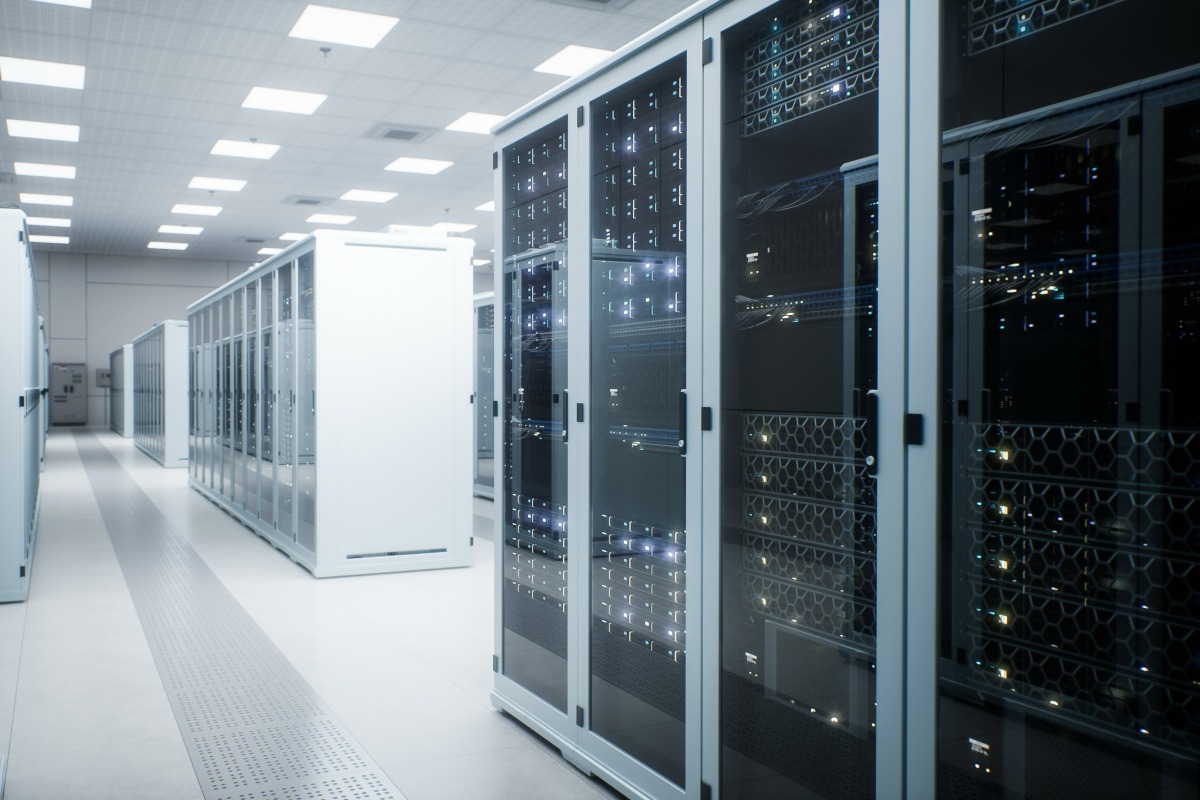
A data centre is a secure, purpose-built facility that houses large numbers of computers (known as servers), along with the networking, power, and cooling equipment needed to keep them running around the clock. In short, it is where the internet, the cloud, and artificial intelligence (AI) physically live. Every time you stream a film, tap a bank card to pay, check a map, or ask an AI chatbot a question, a data centre somewhere does the work. Most of us never see (or notice) them, yet they have become some of the most talked-about, expensive, and contested buildings on the planet. Key takeaways • A data centre is essentially a very large, very secure room (or campus) full of connected computers that store, process, and move data. • 'The cloud' is not a place; it is a service delivered from data centres. • Data centres vary enormously, from a cupboard-sized edge site to a multi-building hyperscale campus drawing the power of a small city. • The AI boom is driving record investment and, with it, new questions about power, water, land, and resilience. • Data centres are now treated as critical national infrastructure (CNI) by many governments, including the UK's. How does a data centre work? At its simplest, a data centre does three things: it stores information, processes it, and moves it to wherever it is needed. When you open an app or load a website, your device sends a request across the internet, usually over fibre-optic cables, to a data centre. Servers there process the request, retrieve or calculate what you need, and send the answer back. All of this typically takes a fraction of a second. To make that possible around the clock, a data centre also needs three things that the computers cannot provide for themselves: 1. Power — delivered reliably and with multiple layers of backup2. Cooling — because computers turn almost every watt of electricity they use into heat3. Connectivity — meaning fast, resilient network links to the outside world Wrap all of that in tight, comprehensive physical and cyber security (due to their sensitive importance to the modern digital world) and you have a data centre. Types of data centre Not all data centres are alike. The main categories are: • Enterprise data centres: built and run by a single organisation for its own use, such as a bank, retailer, or government department. • Colocation ('colo') data centres: where operators lease space, power, cooling, and connectivity to multiple customers who install their own equipment. Retail colocation serves smaller customers; wholesale colocation leases whole halls or buildings to big ones. • Hyperscale data centres: enormous facilities operated by, or built for, the largest cloud and technology companies. They are designed to scale rapidly and often form campuses of several buildings, with the biggest now planned at gigawatt scales. • Cloud data centres: the facilities that deliver public cloud services (rented computing, storage, and software over the internet). Most are hyperscale. • Edge data centres: smaller sites placed close to users or devices in order to cut delay (latency) for services such as streaming, gaming, and industrial systems. • AI data centres (sometimes termed 'AI factories'): facilities designed specifically for AI workloads, with extremely dense racks of specialist chips and advanced cooling. Some are run by AI-focused cloud providers, often called 'neoclouds'. • Modular and containerised data centres: prefabricated units built off site and delivered ready to install, useful for speed or remote locations. These categories overlap. A single facility can be, for example, a hyperscale, cloud, and AI data centre all at once. What are data centres used for? Data centres underpin almost every digital service. Common uses include: • Cloud computing and hosting: renting out computing power, storage, and software so organisations (and users) do not have to run their own. • The internet itself: hosting websites, email, apps, social media, and online shopping. • Streaming and content delivery: storing and delivering films, music, games, and live broadcasts to millions of devices. • Networking and traffic exchange: acting as hubs where networks interconnect and internet traffic is passed between them. • Banking and payments: processing transactions and detecting fraud in seconds. • Healthcare: patient records, imaging, and medical research. • Government, policing, and emergency services: secure databases and coordination systems. • High-performance computing (HPC): supercomputing for weather forecasting, climate modelling, engineering, and simulation. • Research and science: universities and laboratories use data centres to analyse huge datasets, from genomics to particle physics to space missions. • AI training and inference: training teaches a large language model (LLM) by processing enormous datasets; it's extremely compute-heavy. Inference is what happens when a trained model answers your question and, as AI use grows, it's becoming a major source of demand as well. • Quantum computing: quantum computers are mostly experimental and are often housed in specialist facilities, but they are increasingly linked with conventional data centres, which handle the surrounding 'classical computing'. What is inside a data centre? Inside, a data centre divides into two broad worlds. The IT equipment does the computing. The supporting infrastructure keeps it powered, cool, connected, and safe. The computing kit • Servers: the computers themselves, stacked in racks. A single facility may hold tens of thousands of these. • CPUs (central processing units): general-purpose processors that run operating systems and most everyday software. • GPUs (graphics processing units): originally built for graphics, now the workhorses of AI because they can perform huge numbers of calculations in parallel. They are powerful, expensive, and power-hungry, with the latest generation of AI chips being able to draw around a kilowatt each. • Other accelerators: custom AI chips, such as tensor processing units (TPUs), designed for specific workloads. • Storage: solid-state drives (SSDs) and hard disk drives (HDDs) that hold the data. • Networking equipment: switches and routers that link servers to each other and to the outside world. In AI clusters, ultra-fast networking between chips is as important as the chips themselves. • Racks: the standardised metal frames that hold servers, storage, and networking kit. A traditional rack draws roughly five to 10 kilowatts, whereas AI racks can exceed 100 kilowatts, which is why AI is forcing a redesign of data centres. • Cabling: structured fibre-optic and copper cabling links everything inside the building, whilst fibre routes (including subsea cables) link data centres to each other and to the wider internet. Power • Grid connections and substations: high-voltage power arrives from the grid, often via a dedicated on-site substation, and is stepped down by transformers. • Switchgear: equipment that controls, protects, and isolates electrical circuits. • Uninterruptible power supplies (UPS): large battery systems that keep servers running through a power cut for the seconds or minutes it takes for generators to start. • Backup generators: typically diesel - or increasingly cleaner alternatives such as hydrotreated vegetable oil (HVO) - which take over during a longer outage. They are mostly only run for testing and emergencies. • Power distribution units (PDUs) and busbars: PDUs distribute electricity to racks, whilst busbars are rigid metal conductors that carry large currents along the room, often overhead, replacing bulky cabling. • Redundancy: power is usually duplicated so that no single failure takes the facility down. You will see this described as N+1 (one spare) or 2N (a fully mirrored system). Cooling Every watt of power used by the computers ends up as heat, so cooling is vital. The main approaches are: • Air cooling: cool air is pushed through the racks. Layouts often use 'hot aisles' and 'cold aisles' to keep hot and cold air separate. • Chillers and evaporative (adiabatic) cooling: systems that remove heat from the building. Evaporative methods can be energy efficient but use water. • Liquid cooling: water or specialist fluid is brought directly to the hot components (direct-to-chip), or the servers are submerged in fluid (immersion). It is increasingly essential for dense AI racks. • Heat reuse: some sites now capture waste heat for use in district heating networks, offices, or other buildings. Layout • White space: the areas where the IT equipment lives, such as data halls full of racks. • Grey space: the back-of-house areas that support the white space, such as plant rooms, generators, switchgear, UPS rooms, chillers, and storage. Safety, security, and monitoring • Physical security: perimeter fencing, access controls, CCTV, and on-site security teams. • Fire detection and suppression: specialist systems designed to protect equipment, often using gas or water mist rather than conventional sprinklers. • Monitoring systems: building management and data centre infrastructure management (DCIM) software track temperature, power, and equipment health in real time. Why do data centres use so much power and water? The computers run continuously, and the cooling and backup systems around them also need power. AI has pushed this up sharply, since AI chips are more power-hungry and are packed more densely. As such, because data centres need reliable, round-the-clock supply, getting a grid connection has become one of the biggest obstacles to building them. On-site power generation (including the deployment of 'microgrids') is one approach increasingly being explored to combat this. Water use, meanwhile, varies enormously by design. Some facilities use 'closed-loop' systems that recirculate the same water, whilst others use evaporative cooling that consumes water as it evaporates. There is also an indirect footprint, because generating electricity can itself use water. Operators measure and report this with metrics like 'water usage effectiveness' (WUE), but it remains a sensitive local issue. The industry has made long-running efforts to cut energy waste, buy renewable power, and reuse heat. Nevertheless, whether efficiency gains can keep pace with soaring AI demand is an ongoing debate, alongside discussions around the resultant environmental impacts. The bottom line A data centre is simply a building full of computers, but it is the building on which almost everything digital now depends. This, as a side effect, also makes them high-profile targets for malicious actors and nation states, during both peacetime and wartime. As AI, cloud computing, and the digital economy expand, these facilities - which were once barely regarded outside of specialist circles - will only continue to become a more present part of daily discussions and life. Ultimately, understanding how data centres work, what they need, and what they cost, alongside their impacts and implications, has never mattered more. Want to go deeper? Explore our coverage of hyperscale facilities, AI infrastructure, data centre cooling, data centre power, edge computing, and more.


Armada begins European AI infrastructure production in Dublin
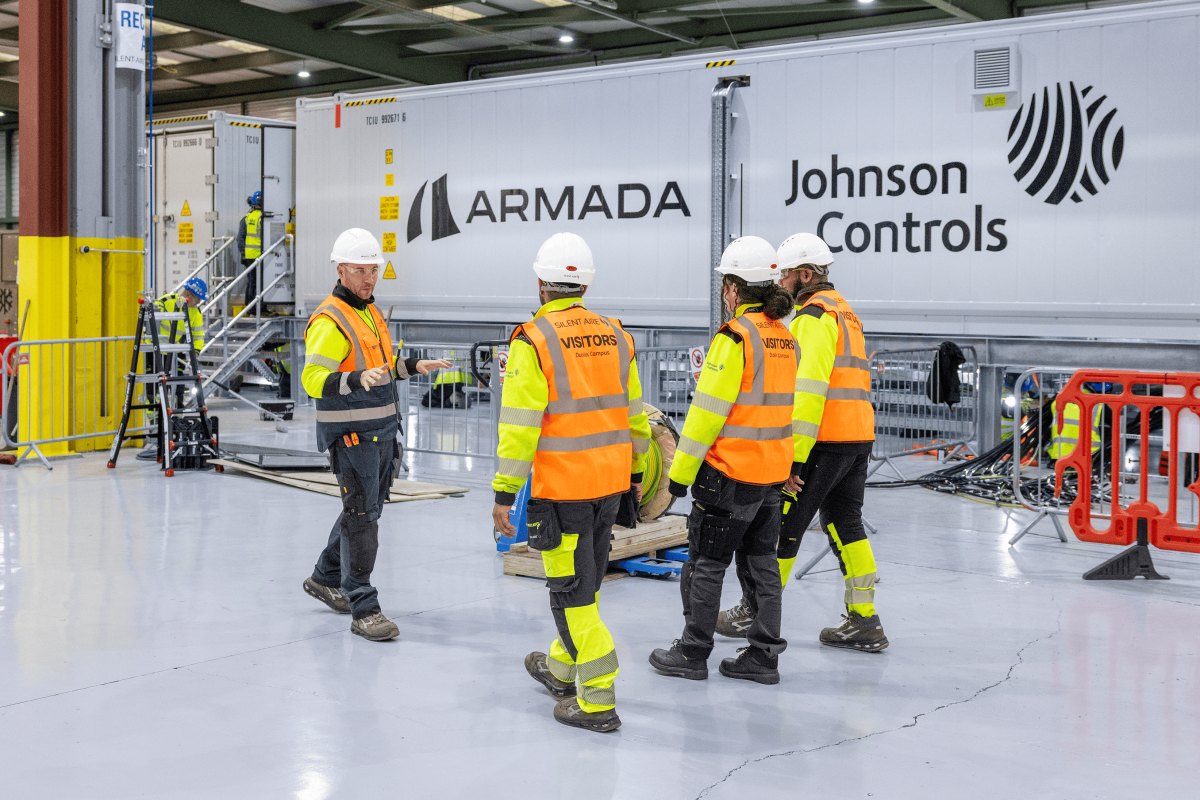
Armada, a US provider of modular edge data centres and connectivity for remote sites, and Johnson Controls, a global provider of smart building technologies, have begun production at Galleon Forge Two, a manufacturing facility in Dublin, Ireland, producing modular data centre infrastructure for sovereign AI deployments. The facility is Armada's first European manufacturing operation and the second Galleon Forge established at a Johnson Controls site, following Galleon Forge One in Gilbert, Arizona, USA. The companies marked the start of production with the completion of the first Dublin-built Leviathan, a modular data centre with multi-megawatt capacity destined for Fossefall in Norway. The unit was engineered, integrated, and tested at the Dublin facility. Leviathan combines Armada's computing infrastructure and software with Johnson Controls' thermal management technology and manufacturing capabilities. Its thermal systems include coolant distribution units, chillers, and building controls, alongside cooling technologies designed to reduce water consumption, energy use, and noise. Manufacturing capacity expands across Europe Galleon Forge Two occupies 90,000ft² (8,361m²) at Johnson Controls' Dublin manufacturing site and is supported by approximately 700 engineers, technicians, and other skilled workers. The operation is also expected to involve additional roles across the European supply chain. The first Galleon Forge, located in Gilbert, Arizona, is expected to begin continuous production in early 2027. The facility will cover up to 400,000ft² (37,161m²) and support more than 500 jobs, with further employment across the domestic supply chain. Armada also plans to expand manufacturing at a Johnson Controls site in Edmonton, Canada. The manufacturing model is intended to allow countries and regions to produce sovereign AI infrastructure domestically, using local workforces and supply chains. “The speed of the sovereign AI revolution requires a new approach to meet demand,” says Dan Wright, co-founder and CEO of Armada. “The Galleon Forge model keeps producing and it’s designed to keep expanding. We can now deliver to any nation or organisation that needs advanced computing infrastructure manufactured within its own borders, owned and controlled on its own terms.” Austin Domenici, President of Global Data Centre Solutions at Johnson Controls, adds, “We’ve been building modular infrastructure for nearly two decades. What’s different today is the scale, density, and speed AI demands. "With Armada, we’re combining that experience with our thermal expertise and manufacturing scale to complete more of the complex integration work in the factory and bring compute online faster and more predictably.” Leviathan operates using the Armada Platform, which manages power, cooling, and computing across individual units and supports open-source and proprietary AI models. Customers own the infrastructure and retain control of its operation without relying on an external cloud provider. Through the Armada Sovereign SI Grid, multiple Leviathan units can operate as a fleet. Initial deployments in Norway and Australia Norwegian company Fossefall has ordered five Leviathan modular data centres, with combined capacity exceeding 9MW. Deliveries are scheduled to be completed by the first quarter of 2027, beginning with the unit produced in Dublin. Øyvind Vesterdal, CEO of Fossefall, comments, “Europe needs more advanced computing infrastructure, and the focus now needs to be on getting projects built. “Working with Armada and Johnson Controls gives us a more standardised and modular approach to deployment. This can help shorten timelines and make projects easier to develop in close cooperation with local communities. With access to clean energy, political stability, and a suitable climate, the Nordics are well positioned for large-scale AI infrastructure.” In Australia, WinDC plans to deploy 11MW of modular data centre capacity across renewable energy sites, locating computing infrastructure close to wind, solar, and battery generation. “Australia's energy transition depends on building AI infrastructure in the right place, where the renewable energy is, rather than waiting for a grid that can't scale fast enough to carry it,” notes Andrew Sjoquist, founder and CEO of WinDC. “Leviathan lets us bring compute directly to clean power and scale it with the workload.” For more from Armada, click here.

IDCA launches community assurance programme for data centres
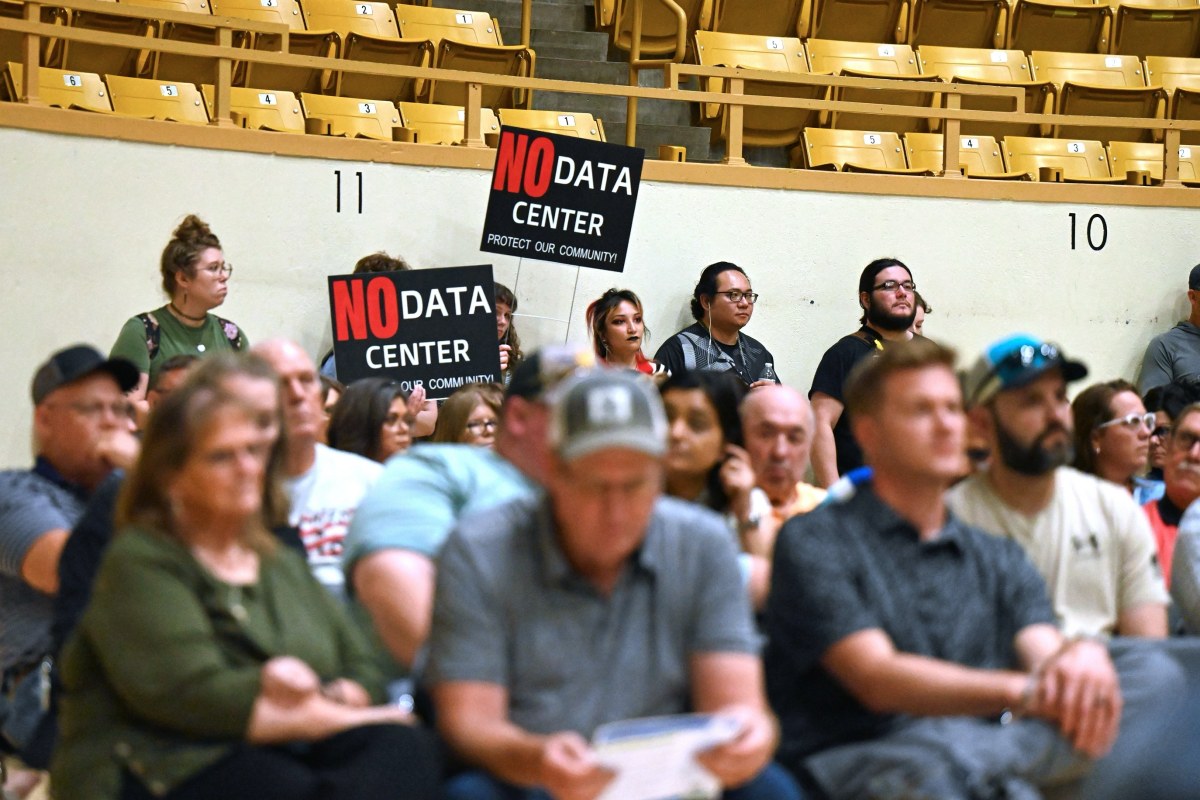
The International Data Center Authority (IDCA), a US-based think tank and certification body for data centres and digital infrastructure, has launched its Community Assurance Program (CAP), an independent assessment and certification initiative intended to address growing opposition to data centre developments. The programme provides developers with a framework for demonstrating responsible practices, whilst also giving communities independently verified information to help them assess proposed projects. The launch comes amid increasing scrutiny of data centre developments as demand for AI and cloud infrastructure grows. Community concerns include land use, energy and water availability, noise, local infrastructure, and the economic benefits of new facilities. According to IDCA research, at least 46 AI data centre projects across 20 US states, representing more than $170 billion (£127 billion) in announced investment, were blocked, withdrawn, or stalled following community opposition between January 2024 and May 2026. “Responsible data centre development requires transparency, measurable commitments, and an independent process that communities can trust,” says Mehdi Paryavi, Chairman and CEO at IDCA. “IDCA’s launch of CAP gives developers the necessary means to demonstrate the impact of their projects and provides communities with verified and substantiated information to protect and preserve what is to their communities’ best interests.” Independent assessment of community impacts CAP assesses projects against environmental and economic indicators, including energy and water use, air quality, noise, land use, carbon footprint, employment, local taxes, and community investment. Each assessment produces a Responsible Community Member Score (RCMS), rated from one to 100. A separate Community Trust Score (CTS) develops over time through reviews and feedback from host communities. The programme is based on five principles, including whole-life-cycle design and operation, ongoing assessment with third-party verification, and the equitable distribution of benefits from the digital economy. Peter Gross, a member of IDCA's board of directors, notes, “The CAP will establish the baseline against which every project’s development is assessed. Three issues are fundamental to addressing community concerns around data centres: transparency, auditability, and financial commitment, where they will be directly addressed by CAP.” The programme covers both developments with selected sites and projects still evaluating potential locations. IDCA can assess and certify proposed developments, engage with governments and host communities, and evaluate prospective sites to help developers understand local conditions before committing to construction. CAP is also tailored to each country's national security requirements, data sovereignty considerations, and local norms. Roger Strukhoff, Chief Research Officer at IDCA, says, “Data centres are the backbone of our economy and they are being brought to a grinding halt, often because communities lack independent, verified information. "We decided to take the side of the communities by providing them the true and independent scoreboard that they need to evaluate each and every project versus the tangible impacts they will have to the social, economic, infrastructure, and environmental aspects of their communities.” By linking developer commitments to independent verification throughout a facility's lifecycle, from commissioning to monitoring and recommissioning, CAP aims to increase accountability between data centre developers and host communities. Ongoing community feedback is also intended to help shift public engagement towards independently checking project commitments. For more from the IDCA, click here.

3Flash plans 480MW data centre in Finland
3Flash Finland, a Finnish developer of industrial-scale solar, green hydrogen, and energy storage projects, is planning a 480MW data centre at Huuhansuo in Lappeenranta, Finland, alongside on-site solar power generation, battery storage, and a gas engine power plant. The project is designed to include up to 200MWp of solar generation, a battery energy storage facility with capacity of up to 320MW/2,560MWh, and a gas engine power plant with capacity of up to 720MW. The on-site generation is intended to reduce the data centre's reliance on the electricity grid during periods of limited supply. The plans were presented to local residents and landowners at Vilkjärvi village hall on Monday, 9 November 2026. The project's environmental impact assessment (EIA) programme is expected to be made available for public review at the end of November. On-site generation and energy storage The gas engine power plant would be capable of starting within minutes when wind and solar generation are insufficient. The engines could operate using natural gas, biomethane, or hydrogen. The data centre would occupy a site of up to approximately 105 hectares, with no lake or river water used for cooling. The final project scope will be determined through the EIA and land-use planning processes, which will also assess a smaller development option. Miko Huomo, Chairman of the Board at 3Flash Finland, says, “Dozens of data centres are being planned in Finland, and many rightly ask whether there is enough electricity for everyone and who pays for the peak hours. "At Huuhansuo, the answer is built into the project: the data centre brings its own balancing power. When electricity is in short supply, it does not take it from the grid at the expense of others. Here, the combination of a data centre and energy production is more than the sum of its parts.” Huuhansuo comprises former peat production land and commercial forest, and it is already zoned for energy production. Fingrid's Yllikkälä substation is located a few kilometres away, whilst a Gasgrid gas transmission pipeline runs alongside the site. Noise, water, nature, and landscape impacts will be assessed through the EIA process, with the findings made publicly available. 3Flash Finland states that it intends to keep noise levels at the nearest homes below permitted guideline values and will manage stormwater appropriately. Questions and answers from the public meeting are due to be published on the company's website within a week. Permits targeted for 2028 The Finnish Supervisory Agency will announce the EIA programme's public consultation period and a further public event. A master plan amendment and detailed local plan will also be prepared in cooperation with the City of Lappeenranta. The project aims to secure permits in 2028, with construction of the first phase potentially beginning in 2029 at the earliest. 3Flash Finland is developing the project towards permit readiness and is seeking a data centre operator and investor. Arctic Securities is acting as financial adviser, with further project partners to be announced once agreements have been finalised.

Centriforce targets £30m sales as data centre demand grows
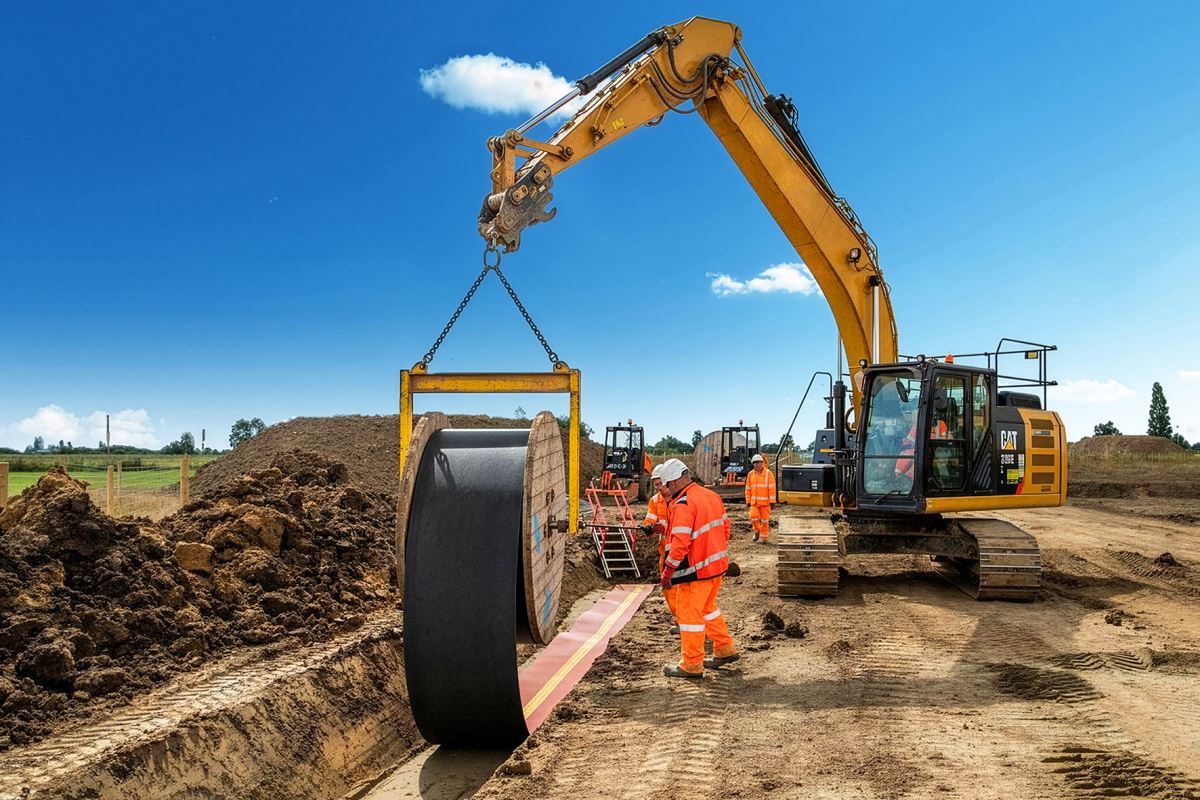
Liverpool-based recycled plastics manufacturer Centriforce Products says it expects sales to exceed £30 million in 2026, up from £28 million in 2025, as investment in data centres, power networks, and renewable energy drives demand for infrastructure protection products. The company reportedly processes more than 20,000 tonnes of discarded plastic annually into products including its Stokbord cable protection boards. It manufactures more than nine million metres of recycled products each year and is expanding its European presence into eight markets: Germany, the Netherlands, France, Spain, Portugal, Romania, the Baltic states, and the Balkans. The expansion comes as investment in data centres and energy infrastructure increases demand for underground cable protection. Centriforce says UK specifications typically require protection boards around 10mm thick, compared with products of 2mm or less still used in some European markets. The company argues that higher protection standards are needed as power networks expand and the consequences of cable damage become more significant. Centriforce has supplied its Stokbord product in roll-out format for more than 10 years, protecting cable routes connecting offshore wind farms to onshore substations. Its Protrack heavy-duty mats provide temporary and permanent access routes across construction sites and sensitive ground, and its customers and project partners have included Ørsted, Iberdrola, NKT, Nexans, Balfour Beatty, and VolkerInfrastructure. European expansion targets infrastructure markets Eleanor Young, Commercial Director at Centriforce, notes, “Europe is building infrastructure at a pace not seen since post-war reconstruction. Every metre of cable in the ground and every access route across sensitive habitat now has to be sustainable in both senses of the word: long-lasting and low-carbon. That's what we've been doing for 50 years.” The company explains that it has manufactured products from 100% post-consumer recycled plastic since 1976. It also holds ISO 14001 accreditation, achieved in 2014, and publishes an environmental, social, and governance (ESG) report. The European expansion forms part of Centriforce’s 'Force of 50' international growth programme, launched to mark its 50th anniversary, and the company is currently recruiting distribution partners in its target markets.

NetApp completes acquisition of PEAK:AIO for AI storage
NetApp, a US enterprise data storage and cloud data services company, has completed its acquisition of PEAK:AIO, a UK-based developer of metadata architecture and high-performance parallel file systems, to advance its storage capabilities for large-scale AI infrastructure. The acquisition brings PEAK:AIO’s metadata services and parallel namespace technology into NetApp’s ONTAP-based data architecture. The companies aim to support high-concurrency workloads and large-scale file systems for AI cloud providers and GPU-as-a-service operators. The technology is intended to keep GPU resources supplied with data whilst reducing storage bottlenecks. NetApp says combining the two platforms will provide a route to storage infrastructure with greater scalability, at the same time as retaining enterprise data management, security, and resilience capabilities. PEAK:AIO’s technology was developed for data-intensive computing, with research institutions including Los Alamos National Laboratory and Carnegie Mellon University identified as examples of its target environments. NetApp says the acquisition will support the development of new capabilities, including NetApp Novus, its planned storage platform for AI workloads. The company expects the combined technology to provide a path towards zettabyte-scale file systems, supporting increasing numbers of files and parallel access across large AI environments. Developing storage for large-scale AI workloads George Kurian, CEO at NetApp, comments, “AI infrastructure is reaching unprecedented scale, demanding a new approach to storage built from the ground up. "By combining PEAK:AIO’s expertise in metadata services and parallel namespace innovation with the proven scale, data management capabilities, and enterprise-grade services of the NetApp Platform, we are leapfrogging the market as we deliver our next-generation, zettabyte-scale architecture to support the growth of AI clouds and GPU-as-a-service providers.” Syam Nair, Chief Product Officer at NetApp, adds, “The AI factory is only as productive as its data pipeline. By combining NetApp’s unified storage with PEAK:AIO’s metadata architecture, we separate metadata from data so performance scales out with concurrency, and we do it with open standards rather than proprietary clients. "Customers can run more AI workloads, on their existing infrastructure, with the security, resilience, and simplicity of enterprise data management.” Mark Klarzynski, CTO and founder of PEAK:AIO, says, “NetApp and PEAK:AIO were built around the shared conviction that the AI era needs data infrastructure designed to scale to extraordinary levels. "With the acquisition by NetApp, we can bring our innovation together with the reach, expertise, and trusted customer relationships of a global data infrastructure leader. Together, we are well positioned to help define what comes next and deliver technology that makes managing data for the AI era more practical, efficient, and accessible.” For more from NetApp, click here.

SolidUltra secures €3m to develop 800VDC power technology
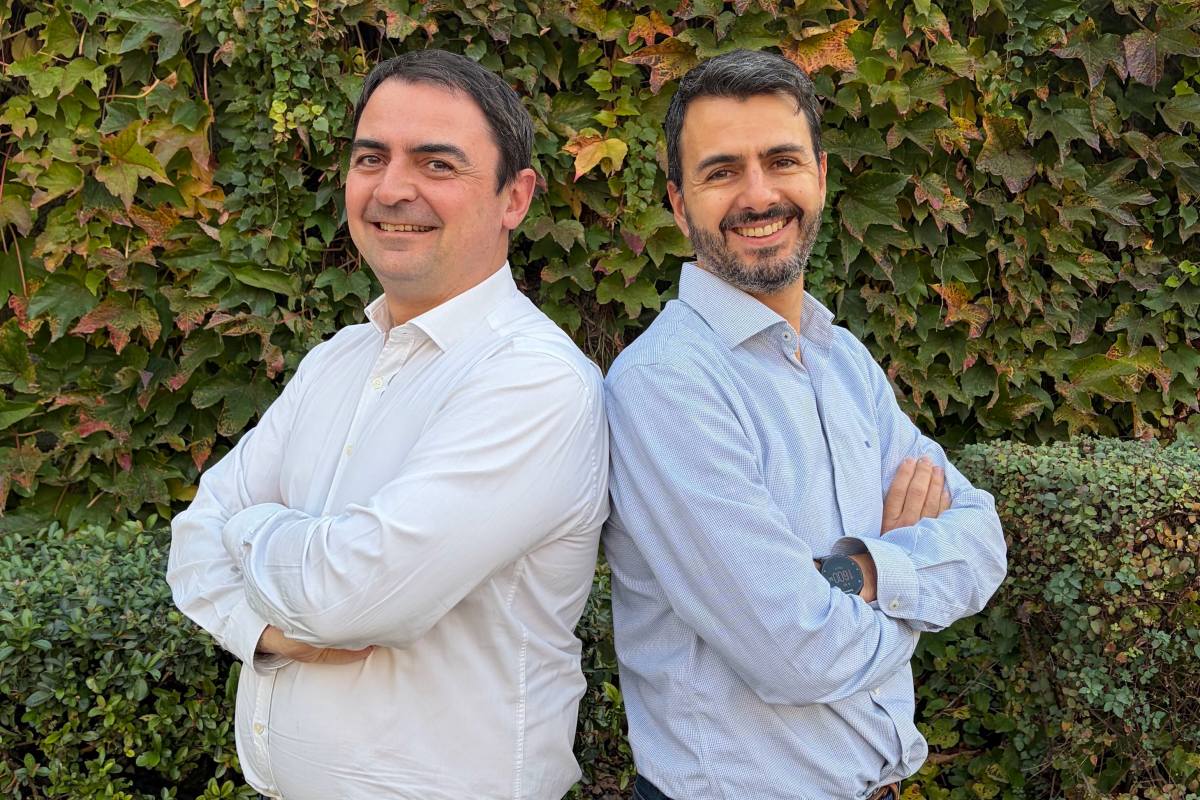
SolidUltra, a new European developer of modular solid-state transformers (SSTs) for AI data centres, has secured €3 million (£2.5 million) in funding from founding partner Watt & Well, a French power electronics group. The funding was secured within three months of SolidUltra’s incorporation in June and will reportedly support technology development and industrialisation. The company is developing a medium-voltage SST designed to connect the electricity grid directly to 800VDC distribution systems in a single conversion stage. The technology targets the power requirements of next-generation AI data centres, where GPU racks are moving towards megawatt-scale consumption. Developing power conversion for AI infrastructure SolidUltra says conventional data centre power architectures rely on a low-frequency transformer followed by several conversion stages. As GPU power density increases, this can add to energy losses, cooling requirements, equipment footprint, and deployment times. Its SST is targeting 98.5% efficiency, with the company claiming it could reduce power losses by a factor of three and equipment footprint by a factor of four compared with conventional architectures. It also aims to reduce the carbon footprint of power-conversion infrastructure by up to 10 times and total cost of ownership by around 30%. The modular design is intended to scale from hundreds of kilowatts to 10MW and beyond. Field-replaceable power modules, which the company says can be swapped in under 15 minutes, are designed to support 99.999% availability. The development roadmap is aligned with the industry's move towards 800VDC architectures, including NVIDIA’s plans for future AI data centres. SolidUltra is targeting a commercial launch in 2028, with the funding supporting engineering, industrialisation, and initial customer engagement. Raul Iglesias (pictured above, right), CEO of SolidUltra, comments, “AI is not only changing computing; it is fundamentally changing the electrical infrastructure required to power it. With rack power moving towards the megawatt scale, the industry needs to rethink the way electricity is converted and distributed inside data centres. "We created SolidUltra to address that transition with a solution designed from the outset for the 800VDC era, backed by Watt & Well’s industrial base. Securing €3 million only three months after our creation gives us the means to move rapidly towards industrial deployment.” Production targets for 2032 SolidUltra aims to deliver 10,000 modular SST systems by 2032, representing approximately 1GW of installed power. Its founding partner, Watt & Well, brings existing power electronics manufacturing capabilities to the development programme. Romain Beaume (pictured above, left), CBO at SolidUltra, says, “Today, data centre operators can wait years to get power to new AI capacity; we want to deliver it in weeks, with lower losses and a footprint four times smaller. Our ambition is to build a European industrial player capable of serving the market on a global scale.”

Downing expands into data centres with 500MW pipeline
Downing Renewable Developments (DRD), a UK developer of solar, battery storage, and onshore wind projects, has expanded into data centre development, establishing an initial pipeline of more than 500MW of advanced projects in Sweden and Finland. The most advanced sites are in central Sweden and southern Finland, with land secured and grid connections anticipated before 2030. Permitting for the first projects is expected to begin shortly, with the sites targeting Powered Land status by Q4 2027. This means securing both the land and power capacity needed for future data centre development. Linking data centre development with renewable energy The move builds on DRD’s experience developing renewable energy projects across the UK and Nordics. The company says it is using this expertise to identify suitable data centre locations whilst exploring opportunities to supply clean energy to sites throughout their operational lives. Tony Gannon, Head of Downing Renewable Developments, comments, “Data centres and energy infrastructure are becoming increasingly interconnected. Access to power is a fundamental consideration when identifying where new data centre capacity can be developed, which makes this a natural extension of our existing renewable energy development capabilities.” Tom Williams, Head of Energy and Infrastructure at Downing, adds that the company aims to provide firmed power from portfolios of renewable generation assets to its data centre developments, offering long-term supply security while reducing their impact on the grid and the environment.

Capacity Europe 2026: Tackling constraints sets the agenda
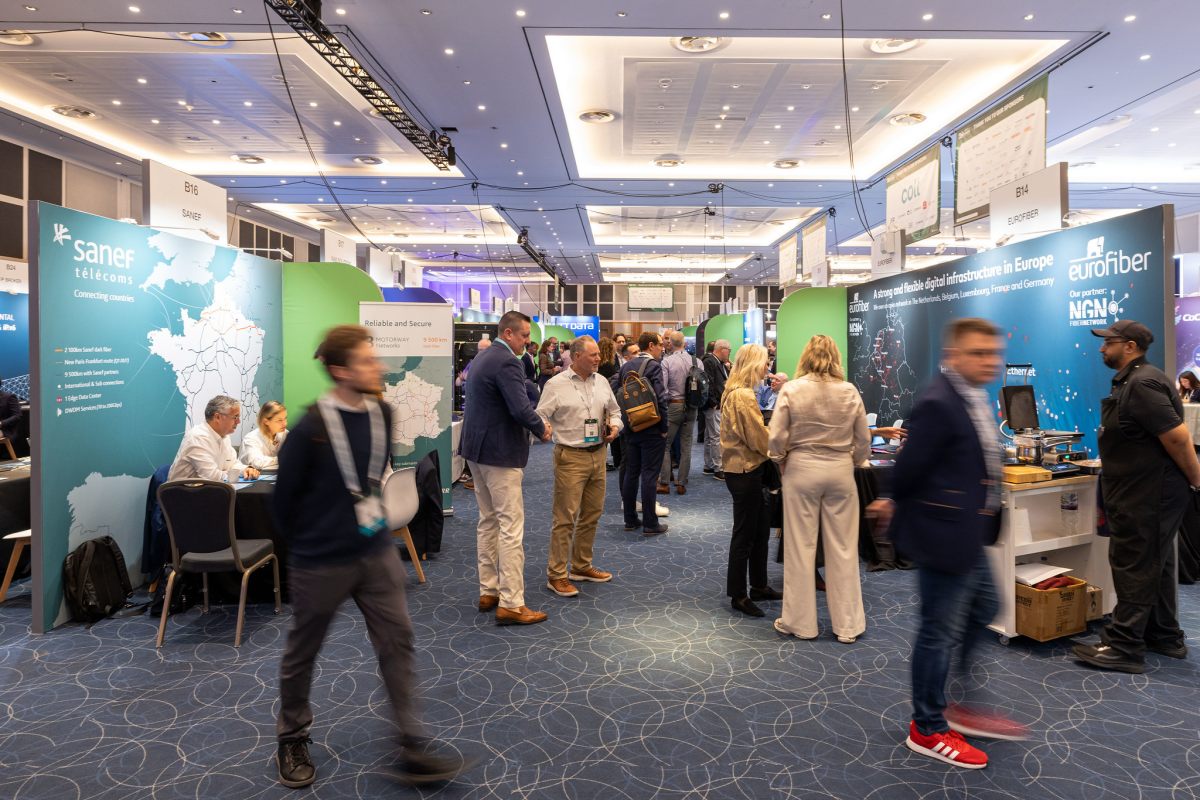
This October, Capacity Europe, an event for global digital infrastructure and connectivity, marked its 25th anniversary at the InterContinental London - The O2, bringing together more than 3,500 decision makers from across the connectivity and digital infrastructure community. As DCNN observed, speaking to a wide spectrum of those present whilst at the event, AI demand was largely taken as self-evident. The more pressing discussions centred on what stands between that demand and its delivery, with key talking points being around power, grid timelines, equipment, skilled labour, community consent, and the discipline of the capital funding it all. Key takeaways Machines overtake humans On the Market Forces Stage, Colt’s Avijit Singh opened with data from Cloudflare showing that machine-generated web requests overtook human ones for the first time in June, at 57.4% to 42.6%. Machine traffic could exceed human traffic by 100 times within five years, he said, shifting the emphasis from north–south traffic towards east–west flows between agents and data centres. That raises the bar for latency, resilience, automation, and observability, and moves security towards verifying machine identity rather than users. Inference and the edge Several speakers at the event identified inference, rather than training, as the next wave of compute. Verizon’s Jeff Hulse cited McKinsey research suggesting that 2026 is the first year in which inference investment matches training, whilst DE-CIX’s Ivo Ivanov noted that each millisecond of latency equates to roughly 80km, placing agentic and physical AI applications within 100km to 150km of the inference they depend on. The result is renewed demand for edge locations and a European data centre map spreading well beyond FLAP-D. Supply chains and grid certainty Securing supply emerged as a bigger concern than price. Telehouse’s Ozgur Duzgunoglu said generators can take two years to arrive and high-voltage transformers 12 to 18 months, prompting operators to commit to suppliers before designs are final. On power, the issue was less availability and more predictability, with one investor describing grid operators promising connections in 36 months and delivering in 48. National Grid’s David Atkins said the UK transmission owner is building three times as much network in this five-year period as in the last, and that flexibility of just 1% to 2% from data centres could unlock significant spare capacity. Capital, risk, and social licence The AI Build Stage hosted 'Capital at Risk: Navigating investment and returns in the AI Era', chaired by the Data Centre Alliance’s Venessa Moffat. Panellists from BGO Data Centers, DigitalBridge, Guggenheim, and Echelon Data Centres agreed that the underlying risks are familiar, but they are magnified by the speed and scale of investment. Underwriting standards must adapt, they said, to faster equipment upgrade cycles and a broader investor base that now includes pension and sovereign wealth funds. DigitalBridge’s Zach Gellman was emphatic on community acceptance, stating, “Social licence is 100% critical.” Connectivity and the Fibre Investment stage Connectivity featured as a recurring warning against late planning. Digital Realty’s Paula Cogan said network planning still comes too late in many builds, and Salam’s Amjad Arab said AI workloads can need up to 36 times more fibre than traditional applications. FLAG’s Paul Abfalter described significant underinvestment in long-haul links between data centres, whilst Orange announced a joint venture to deliver Pisces, a subsea system linking Ireland, France, Spain, and Portugal without transiting the UK. On the Fibre Investment stage, nexfibre’s Rajiv Datta challenged the CMA’s provisional findings on the £2 billion Netomnia acquisition, with the regulator’s final decision due by 15 December. Where will value land? The closing panel, 'Digital Infrastructure in 2029: Who Captures the Next Wave of Value?', brought together speakers from FLAG, ING, Mobile UK, and LINX. ING’s Jeroen Kleinjan offered the clearest answer: “Value will accrue around bottlenecks”, which he named as power, strategic sites, scarce routes, and trusted interconnection. Meanwhile, Mobile UK’s Hamish MacLeod noted that UK mobile revenues have fallen by about 30% while traffic has grown 40 times, a reminder that growth alone does not guarantee returns. For more on Capacity Europe, click here.


Translate »